Mozart's 'Dissonance' Quartet: Innovative, influential, and enduring in the history of classical music.

| Entertainment | Music |
Updated By: History Editorial Network (HEN)
Published:
3 min read
Mozart composed the String Quartet in C major, K. 465, also known as the 'Dissonance' Quartet. This piece is the final work in a set of six string quartets dedicated to Joseph Haydn. Its nickname arises from its unconventional introduction, which features bold chromatic harmonies that were unusual for its time. These harmonies create a sense of tension and resolve that was innovative and striking, reflecting Mozart's advanced understanding of musical structure and expression.
The quartet's opening has a slow, mysterious quality, with dissonant intervals that gradually build into a more consonant and structured Allegro. This introduction challenged contemporary listeners and musicians, showcasing Mozart's compositional mastery and his ability to push the boundaries of classical music norms. The rest of the quartet follows a more conventional form, yet it retains the inventive spirit that characterizes Mozart's work.
The influence of this piece extended beyond its initial reception, impacting subsequent c
Location: Austria
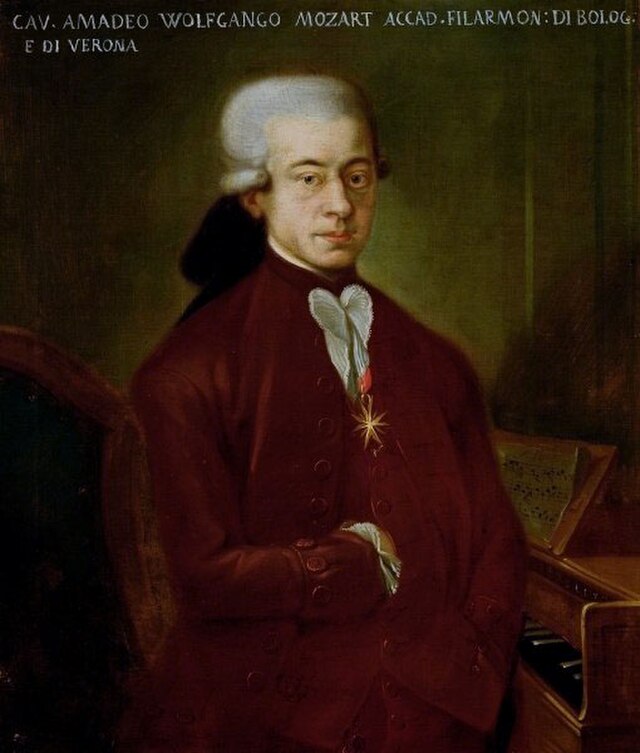
Explore the Life Moments of Wolfgang Amadeus Mozart | 