Mozart's Dedication: String Quartets for Haydn - Innovating classical chamber music, lasting impact, masterful compositions.
Vienna, Austria
Art
Music
4 min read
Updated By: History Editorial Network (HEN)
Published:
Updated:
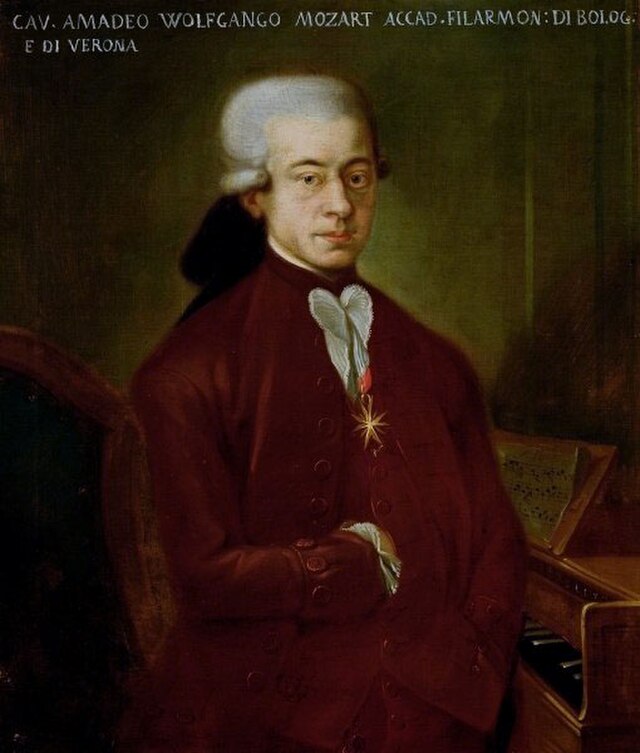
In 1782, Wolfgang Amadeus Mozart began composing a set of six string quartets in Vienna that he would later dedicate to Joseph Haydn. These works, written between 1782 and early 1785, reflect Mozart’s close study of Haydn’s Op. 33 quartets, which had circulated widely in Vienna. Mozart completed the set over several years rather than as a single project, with individual quartets dated 1782, 1783, 1784, and 1785. The collection was eventually published in 1785 as Opus 10 and formally dedicated to Haydn, whom Mozart regarded as both a colleague and an artistic model.
The six quartets in the set are K. 387 in G major, K. 421 in D minor, K. 428 in E-flat major, K. 458 in B-flat major, K. 464 in A major, and K. 465 in C major. Mozart expanded the conversational interplay among the four instruments, giving more equal roles to viola and cello alongside the violins. The writing features contrapuntal passages, motivic development, and extended movements that differ from lighter divertimento-style chamber works of earlier years. Mozart’s preface to the published set described the quartets as the result of long and careful labor.
When Mozart presented the quartets to Haydn in Vienna, Haydn reportedly praised them in a statement addressed to Leopold Mozart, noting Wolfgang’s compositional skill. The publication in 1785 gathered the six works into a unified collection dedicated to Haydn. The quartets composed beginning in 1782 therefore form one of Mozart’s most substantial chamber music projects of his Vienna years.
Why This Moment Matters
The project begun in 1782 resulted in the six Haydn quartets, published in 1785, representing Mozart’s extended engagement with string quartet writing during his Vienna period.
#Mozart
#HaydnQuartets
#StringQuartet
#ClassicalMusic
#JosephHaydn
Primary Reference
Mozart: "Haydn" String Quartets
Explore the Life Moments of
 AI Twin