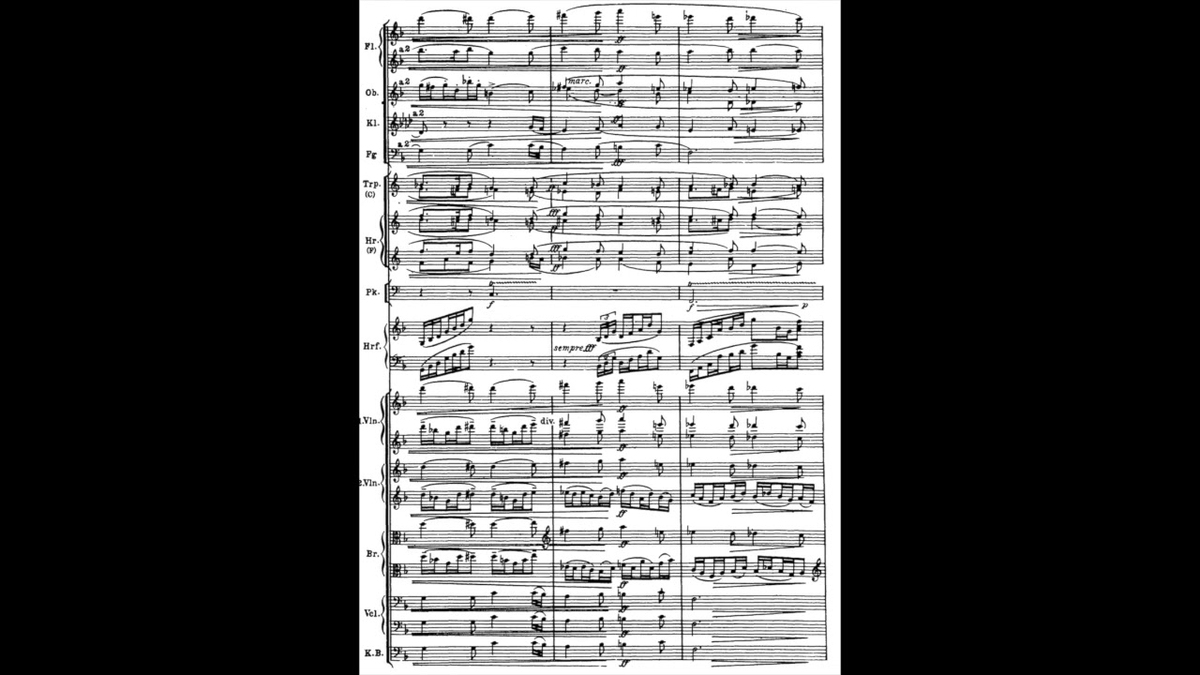
Max Reger's Tribute to Mozart: 'Variations and Fugue on a Theme' showcases his brilliance and influence.
Wiesbaden, Germany
Arts
Music
5 min read
Updated By: History Editorial Network (HEN)
Published:
Updated:
Max Reger’s composition Variations and Fugue on a Theme by Mozart, Op. 132 emerged in 1914 as a carefully structured work rooted in a theme from Wolfgang Amadeus Mozart’s Piano Sonata No. 11 in A major, K. 331. Drawing specifically from the opening theme of Mozart’s sonata, Reger developed a large-scale orchestral composition that reflects both his respect for Classical-era forms and his own late-Romantic harmonic language. The work was completed during the final phase of Reger’s career, at a time when he was already recognized across Germany and beyond for his technically demanding compositions and his expertise in counterpoint.
The piece consists of eight variations followed by a fugue, each section exploring different textures, tonal colors, and structural ideas while maintaining a clear connection to Mozart’s original theme. Reger employed dense orchestration and chromatic harmonies, expanding the relatively simple Classical theme into a more complex and layered musical framework. The concluding fugue demonstrates his command of strict compositional techniques, integrating the theme into a contrapuntal structure that builds toward a full orchestral climax.
The premiere of the work took place on 5 January 1915 in Wiesbaden, Germany, conducted by Reger himself. This performance introduced audiences to a composition that balanced historical reference with contemporary musical language. The work has since remained part of the orchestral repertoire, frequently performed by major symphony orchestras and studied for its intricate design and technical demands.
Reger’s Variations and Fugue on a Theme by Mozart illustrates how early 20th-century composers engaged with earlier musical traditions while developing their own distinct voices. By transforming a well-known Classical theme into a complex orchestral structure, Reger demonstrated both continuity and evolution within Western classical music. The composition requires high technical precision from performers, particularly in navigating its dense textures and maintaining clarity across its variations and fugue.
# MaxReger
#Mozart
#ClassicalMusic
#MusicalHeritage
#PianoRepertoire
#BridgeOfEras
Primary Reference
Max Reger German composer
Explore the Life Moments of
 AI Twin