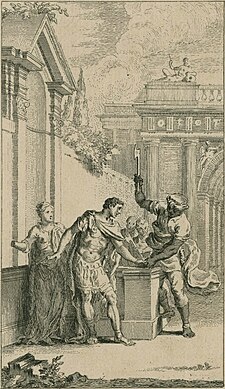
Shakespeare's early tragedy "Titus Andronicus" shapes his career and influences English drama.
United KIngdom
Literature
Theater
4 min read
Updated By: History Editorial Network (HEN)
Published:
Updated:
During the period between 1593 and 1594, William Shakespeare wrote "Titus Andronicus," one of his earliest tragedies. This work emerged when the playwright was establishing himself in the theatrical world. In those days, the Globe Theatre, where his plays would often be performed, was gaining prominence as a center for drama and the arts in London. The play "Titus Andronicus" marks a foray into the genre of tragedy, featuring themes of revenge, family honor, and political strife.
Notably, "Titus Andronicus" is known for its graphic and violent content, distinguishing it from Shakespeare's other works. The play's intense depiction of revenge and brutality, combined with its complex characterization and intricate plot, contributed to its initial popularity and later controversial status. These elements suggest Shakespeare's attempt to appeal to the tastes of Elizabethan audiences, who had a penchant for sensational and emotionally charged narratives.
"Titus Andronicus" showcases Shakespeare's experimentation with dramatic structure and stylistic elements, laying the groundwork for his future tragedies such as "Hamlet" and "Macbeth." Its success helped in cementing Shakespeare's reputation and influenced contemporary playwrights, as well as the development of English drama.
The impact of "Titus Andronicus" is still discussed by scholars and enthusiasts, who analyze its contribution to literature and theater. The play's exploration of dark themes and its position in Shakespeare's oeuvre continue to captivate and provoke discussion among literature students and theatre-goers alike.
#MoofLife #Shakespeare #TitusAndronicus #Literature #Theatre #Tragedy #ElizabethanDrama
Primary Reference
Titus Andronicus - Wikipedia

Explore the Life Moments of
 AI Twin