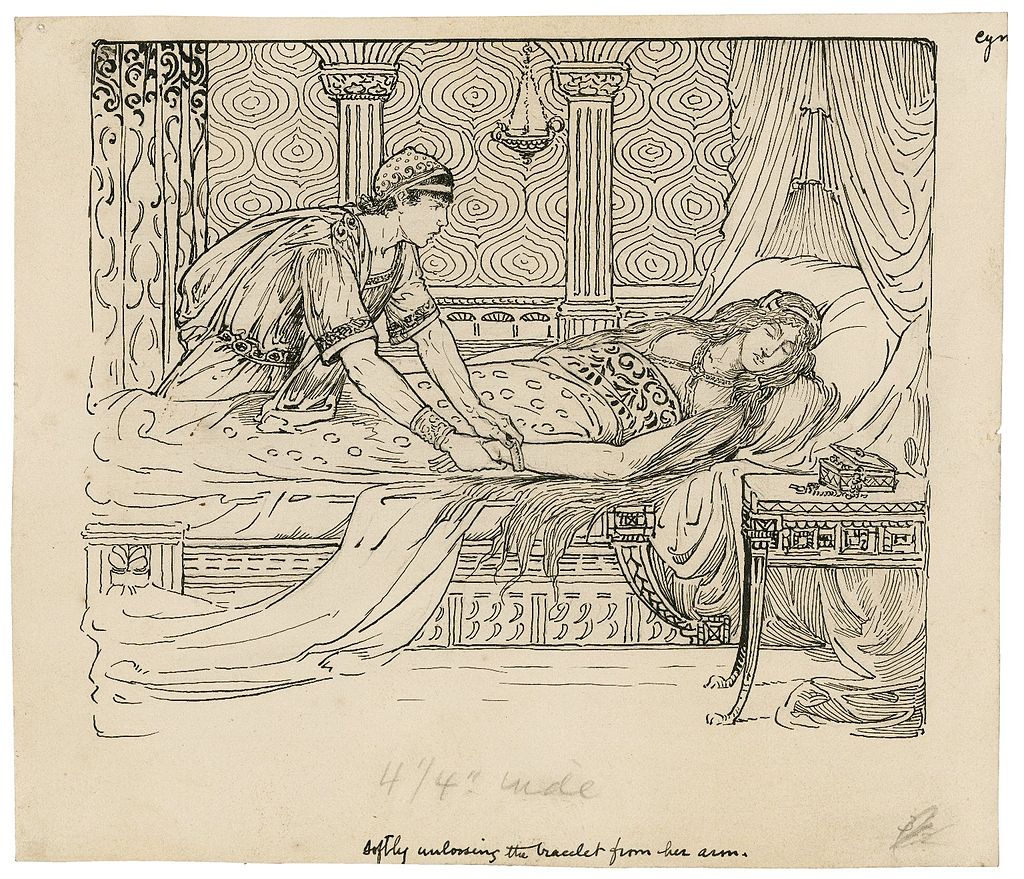
Shakespeare's 'Cymbeline' explores innocence and jealousy, showcasing his mature storytelling and versatility in blending genres.
United KIngdom
Literature
Theatre
4 min read
Updated By: History Editorial Network (HEN)
Published:
Updated:
During the period when William Shakespeare wrote 'Cymbeline,' he focused on themes of innocence and jealousy. 'Cymbeline' is one of Shakespeare's later plays and combines elements of tragedy and comedy. The play is set in Ancient Britain and revolves around the British King Cymbeline and his daughter Imogen. The plot includes mistaken identities, long journeys, and ultimately reconciliation.
This period in Shakespeare's career saw him delve into more complex narratives and diverse character arcs, reflecting a matured storytelling approach. 'Cymbeline' explores the devastating effects of jealousy and the redemptive power of innocence. Its characters range from the scheming Queen, embodying jealousy, to Imogen, representing innocence and virtue.
The writing of 'Cymbeline' occurred when Shakespeare was enriched with experience from his earlier works. By this time, he had already established himself as a significant literary figure in London. His work was influential in the development of English literature and theatre. 'Cymbeline' continues to be studied for its linguistic richness, intricate plot, and its treatment of human emotions and relationships.
In the context of Shakespeare's body of work, 'Cymbeline' highlights his versatility and ability to blend different genres. It also reflects the social and political landscape of the time, touching on themes of authority and the complexities of the human condition.
#Shakespeare #Cymbeline #Theatre #Literature #MoofLife
Primary Reference
Cymbeline - Wikipedia

Explore the Life Moments of
 AI Twin