Impact of September 11 Attacks on Media
New York City, New York, USA and global media networks
Media
Events
9 min read
Updated By: History Editorial Network (HEN)
Published:
Updated:
The September 11 attacks on 11/09/2001 reshaped global media coverage, broadcasting practices, entertainment programming, and public communication in ways that continued long after the attacks themselves. As hijacked airplanes struck the World Trade Center in New York City and the Pentagon in Arlington, Virginia, television networks across the United States immediately suspended regular programming to provide uninterrupted live news coverage. The continuous reporting became the longest uninterrupted news event in American television history, with major broadcast networks remaining on air for four consecutive days without commercials or entertainment programming. Nielsen estimated that at least 80 million Americans watched the evening news on the day of the attacks, while researchers later estimated that nearly two billion people worldwide viewed the events either live or through recorded broadcasts.
The attacks also transformed the way news organizations handled breaking events. Continuous news tickers became a standard feature on television channels after networks used them extensively during the crisis to provide real time updates. Broadcasters worldwide interrupted scheduled programming to cover developments from the United States. In countries including Brazil, the United Kingdom, Australia, and many others, networks aired extended special coverage and adjusted schedules for days afterward. Journalists faced intense pressure to report rapidly changing information, and several inaccurate reports were broadcast during the confusion, including false claims about additional explosions and attacks in Washington, D.C.
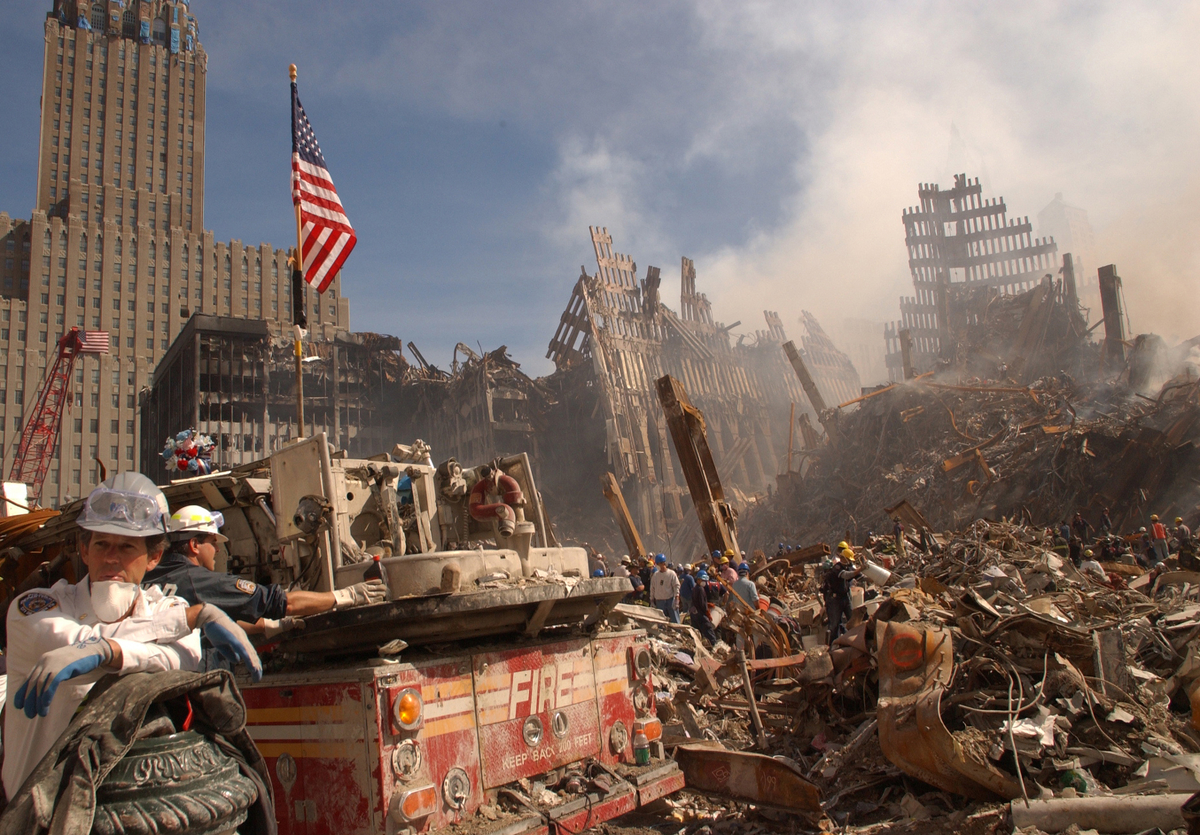
Visual media from the attacks became some of the most widely recognized recordings in modern history. Professional journalists, freelance photographers, emergency crews, and civilians documented the destruction using cameras and video equipment. These recordings later assisted investigations, victim identification efforts, historical archiving, and memorial projects. The documentation of the attacks earned several journalism honors, including Peabody Awards and Pulitzer Prizes related to reporting and photography. Over time, institutions and preservation groups continued collecting and digitizing previously unseen footage to maintain historical records of the event.
The entertainment industry also experienced immediate changes after 9/11. Television shows and films featuring the World Trade Center or scenes resembling terrorist attacks were edited, delayed, or canceled. Music companies and radio broadcasters reconsidered playlists and promotional materials. Clear Channel Communications distributed a list of songs considered inappropriate for airplay after the attacks, although no formal ban existed. Several musicians and studios altered album artwork, music videos, and advertising campaigns containing images of airplanes or the Twin Towers.
In the years that followed, the attacks influenced media culture, internet communication, and public discourse. News organizations increased focus on terrorism, national security, and international conflict. The growth of online media and later social media platforms changed how terrorist propaganda and crisis information circulated globally. Technology companies, governments, and media organizations increasingly developed systems to monitor and remove extremist content online. The attacks also contributed to broader discussions about surveillance, digital privacy, and the role of media in shaping public understanding during emergencies.
Historical Significance
The September 11 attacks occurred during the early years of widespread internet use and 24 hour cable news expansion. Because of this timing, 9/11 became one of the first global crises experienced simultaneously by audiences around the world through live television and rapidly developing online communication systems. Many broadcasting methods, emergency reporting practices, and digital information policies introduced after 2001 remained part of global media operations for decades afterward.
#mooflife
#MomentOfLife
#September11
#MediaImpact
#DigitalNews
#Wikipedia
#OnlineInformation
Primary Reference
History of Wikipedia

Explore the Life Moments of
 AI Twin