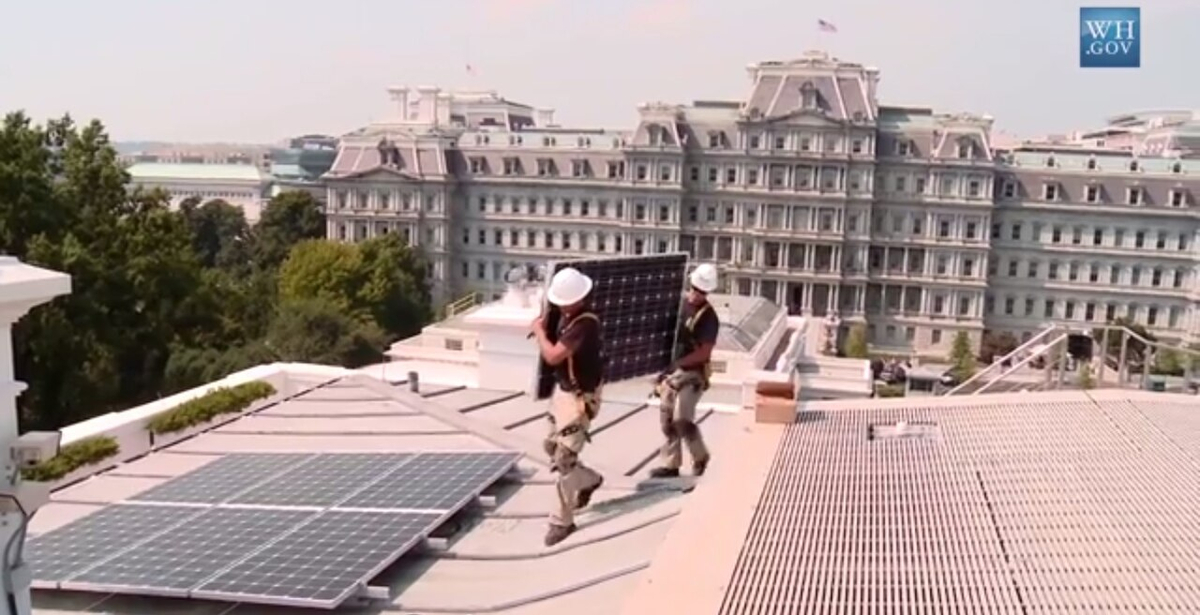
Solar Panels Added to White House Roof
United States of America
Renewable Energy
Solar Energy
Historic Preservation
4 min read
Updated By: History Editorial Network (HEN)
Published:
Updated:
The installation of solar photovoltaic panels on the roof of the White House was a pivotal step in promoting renewable energy within a historic government building. This initiative aimed to modernize the energy infrastructure of the White House while demonstrating a commitment to sustainable practices. The decision to add solar panels was significant as it represented a revival of solar energy systems at the White House, which had not been utilized since the removal of solar thermal collectors that were installed during the Carter administration. The return of solar technology to this iconic building underscored a broader shift towards renewable energy sources in federal policies and initiatives.
The impact of this installation extended beyond the immediate benefits of generating clean energy. It served as a symbolic gesture, reinforcing the importance of environmental stewardship at the highest levels of government. The solar panels were expected to produce a portion of the electricity needed for the White House, contributing to energy efficiency and reducing reliance on fossil fuels. This move aligned with growing public interest in renewable energy and climate change mitigation, reflecting a changing attitude towards energy consumption and environmental responsibility in the United States. The White House's adoption of solar technology also aimed to inspire other institutions and homeowners to consider renewable energy solutions, thereby fostering a culture of sustainability across the nation.
#mooflife
#MomentOfLife
#SolarEnergy
#WhiteHouse
#RenewableEnergy
#Sustainability
#EnvironmentalPolicy
Primary Reference
White House solar panels power up

Explore the Life Moments of
 AI Twin