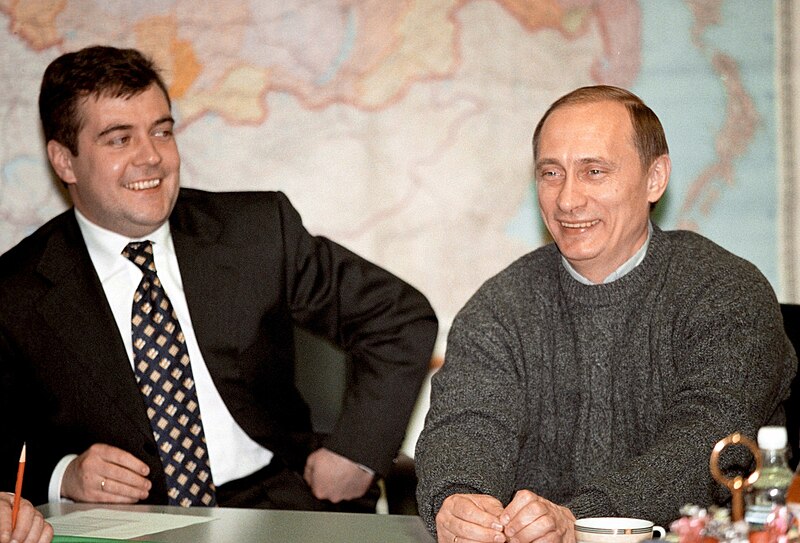
Elected President of Russia
Russia

Political
Global Trade
3 min read
Updated By: History Editorial Network (HEN)
Published:
In March 2000, Vladimir Putin was elected President of Russia. Putin's rise to power came after serving as acting President following Boris Yeltsin's resignation. Putin's background as a former KGB officer and his tough stance on Chechen separatists appealed to many Russians seeking stability and security.
Putin's presidency had a significant impact on Russia's political landscape. He implemented various reforms aimed at centralizing power, cracking down on corruption, and boosting the economy. Under Putin's leadership, Russia experienced a period of economic growth and regained its status as a major player on the world stage.
Putin's tough stance on issues like the Chechen conflict and his efforts to restore Russia's influence in the former Soviet bloc were met with both praise and criticism. His policies polarized public opinion, with some viewing him as a strong leader restoring Russia's glory, while others saw him as authoritarian and repressive.
The election of Vladimir Putin as President marked a new chapter in Russia's history. His leadership style, characterized by a mix of authoritarianism and pragmatism, has shaped the country's domestic and foreign policies for over two decades.
#VladimirPutin #RussianPresident #Election #PoliticalHistory
Primary Reference
2000 Russian presidential election - Wikipedia
Explore the Life Moments of
 AI Twin