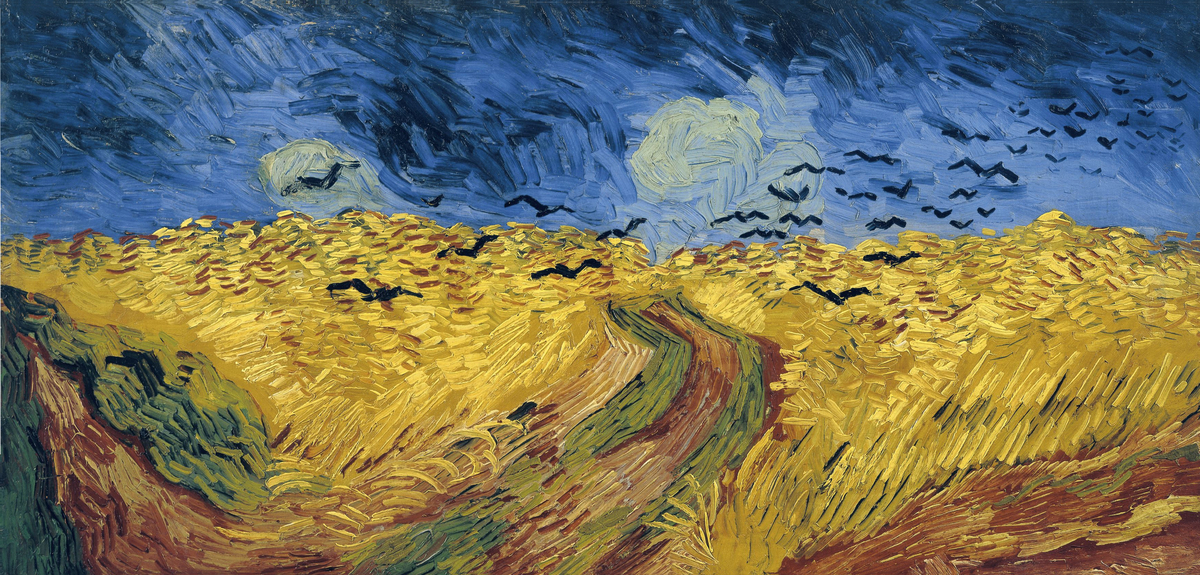
Van Gogh's 'Wheatfield with Crows' reflects his mental turmoil and isolation in final days.
Netherlands
Art Mental Health
4 min read
Updated By: History Editorial Network (HEN)
Published:
Vincent van Gogh painted 'Wheatfield with Crows' during the final weeks of his life. This artwork is believed to be an expression of his profound emotional state and internal struggles. The scene depicts a vast wheat field under a turbulent sky, with a path that seemingly leads nowhere, and dark crows flying above. The composition and subject matter suggest feelings of isolation and turmoil.
Van Gogh had been living in Auvers-sur-Oise, a small village near Paris, under the care of Dr. Paul Gachet. Despite some signs of recovery, he continued to grapple with mental illness. His letters to his brother, Theo, reveal a man deeply distressed and disillusioned. During this time, his artwork became increasingly intense and brooding.
'Wheatfield with Crows' is seen by many art historians as a reflection of Van Gogh's mental state. The use of dark colors, chaotic strokes, and the presence of crows—often symbols of death and foreboding—may suggest his sense of hopelessness and despair.
This painting draws attention to the struggle of the artist against his inner demons, making it a significant piece in understanding the trajectory of his final days. Van Gogh's life ended shortly after completing this work, making it one of his last known creations.
The recognition and study of 'Wheatfield with Crows' offer insights not only into Van Gogh's artistry but also into the broader conversation on mental health, creativity, and the human condition.
#VanGogh #ArtHistory #MentalHealth #WheatfieldWithCrows #MoofLife
Explore the Life Moments of
 AI Twin