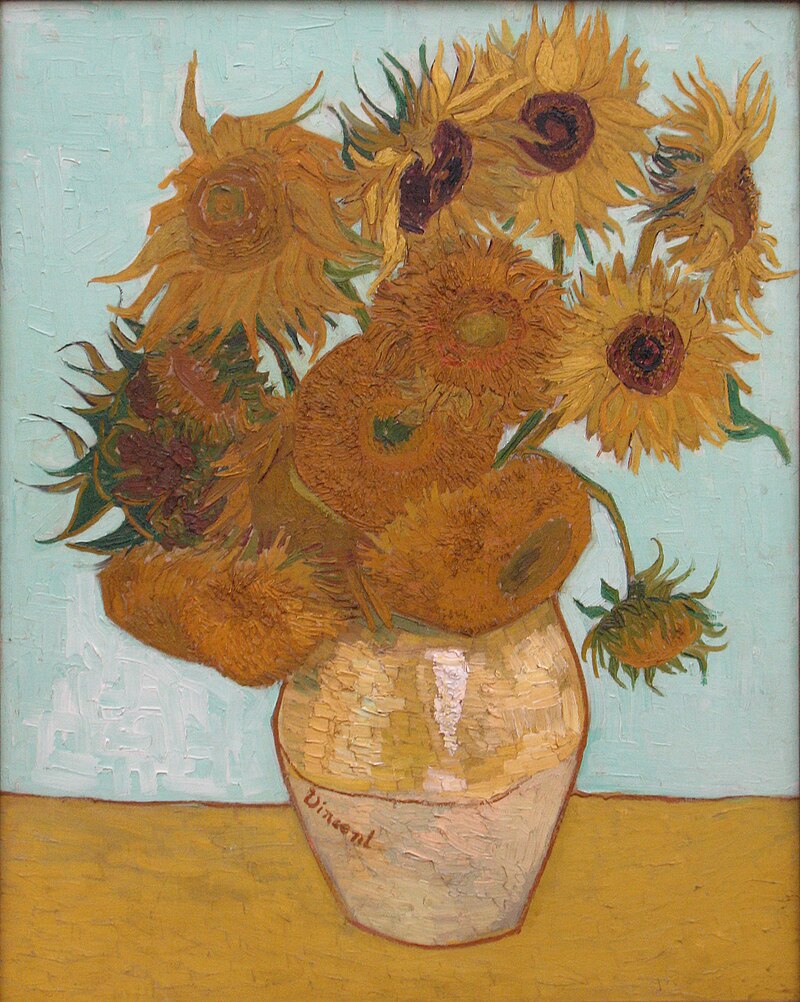
Van Gogh's "Vase with Twelve Sunflowers": Symbol of collaboration and vibrant post-impressionist style.
Netherlands
Artistic
4 min read
Updated By: History Editorial Network (HEN)
Published:
Updated:
Vincent van Gogh created "Painted Still Life: Vase with Twelve Sunflowers" as part of his sunflower series in preparation for the visit of fellow artist Paul Gauguin. This event occurred during Van Gogh's time in Arles, a period characterized by intense artistic production and significant interactions with other artists. Van Gogh intended the sunflower paintings to decorate Gauguin's room, symbolizing his admiration and hope for a productive collaboration.
The sunflower series marked a pivotal phase in Van Gogh’s exploration of vibrant color contrasts and bold compositions. These works departed from the darker tones of his earlier pieces, demonstrating his evolution towards the post-impressionist style. The "Vase with Twelve Sunflowers" exemplifies his fascination with nature and his ability to capture its essence through dynamic brushwork and a vivid palette.
Upon completing the painting, Van Gogh's unique technique and emotional depth garnered attention, although widespread critical acclaim came later. The sunflowers conveyed a sense of energy and life, aligning with Van Gogh’s broader artistic goals and vision. This particular piece illuminates his experimental approach, emphasizing the emotive power of color and texture.
Today, "Vase with Twelve Sunflowers" is regarded as an iconic work in Van Gogh's oeuvre, illustrating his contributions to the development of modern art. The painting remains a testament to his enduring influence and the artistic dialogue he sought with his contemporaries.
#MoofLife #VanGogh #PostImpressionism #ArtHistory #SunflowerSeries #GauguinVisit #Arles
Explore the Life Moments of
 AI Twin