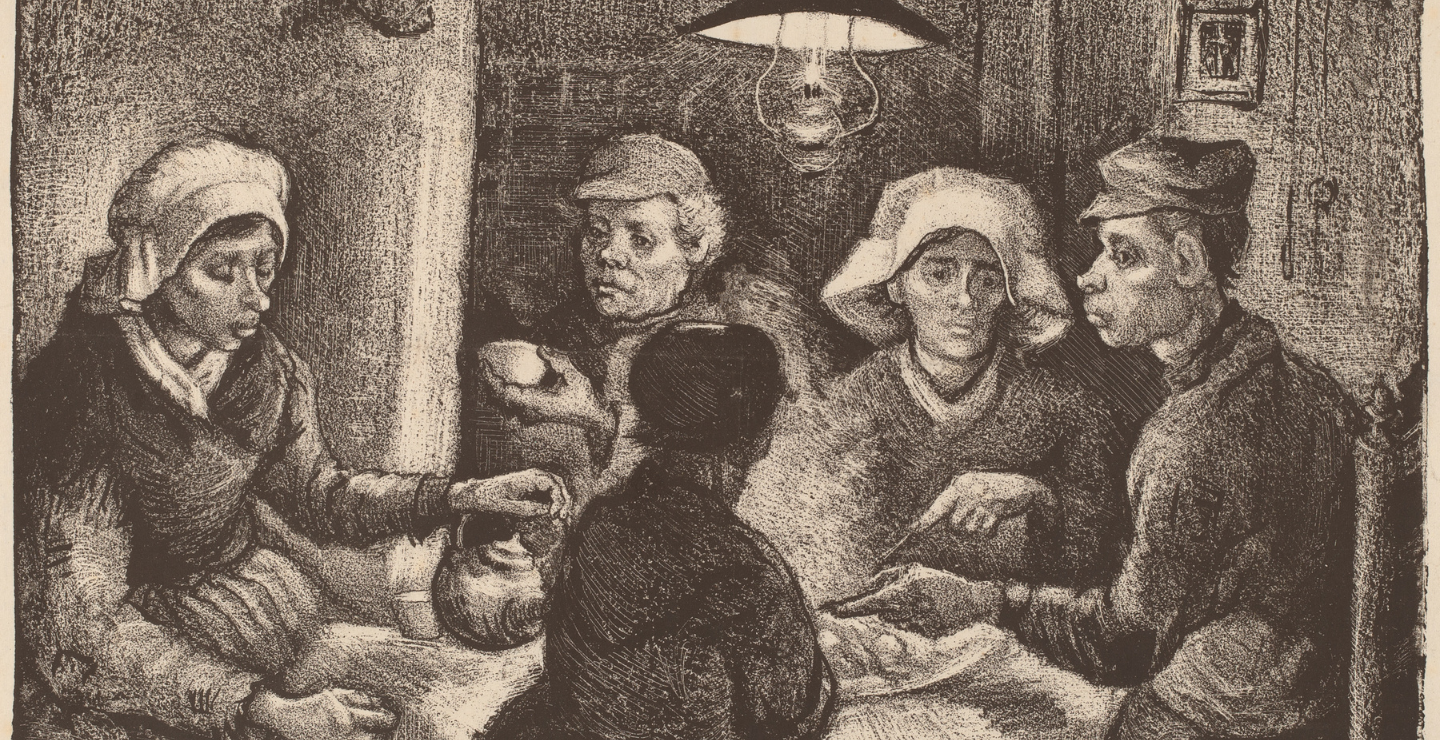
Van Gogh's "The Potato Eaters" shapes his artistic direction with raw depiction of peasant life.
Netherlands
Art Realism
3 min read
Updated By: History Editorial Network (HEN)
Published:
Updated:
Vincent van Gogh completed his first major work, "The Potato Eaters," during a crucial period in his artistic career. At that time, he was residing in the village of Nuenen in the Netherlands. Van Gogh aimed to depict the harsh reality of rural peasant life. He was particularly focused on showing the hardships endured by the working-class families, an interest likely influenced by his own experiences and observations.
"The Potato Eaters" portrays a peasant family sharing a meal of potatoes by lamplight. Van Gogh intended the painting to reflect the raw, earthy quality of peasants toiling on the land. To capture the authentic essence of their lifestyle, he chose somber colors and an unrefined painting style. This approach, however, was initially met with mixed reactions from contemporary audiences and critics. Some believed the work was too crude and unpolished.
Despite early criticisms, "The Potato Eaters" later gained recognition for its unique depiction and sincere portrayal of peasant life. The painting played a significant role in shaping Van Gogh's direction as an artist, emphasizing his commitment to represent the realities of life over idealized versions. Over time, this work has been critically recognized as a foundational piece that helped highlight Van Gogh's evolving technique and thematic interests.
#VanGogh #ThePotatoEaters #ArtHistory #PeasantLife #Realism #MoofLife
Explore the Life Moments of
 AI Twin