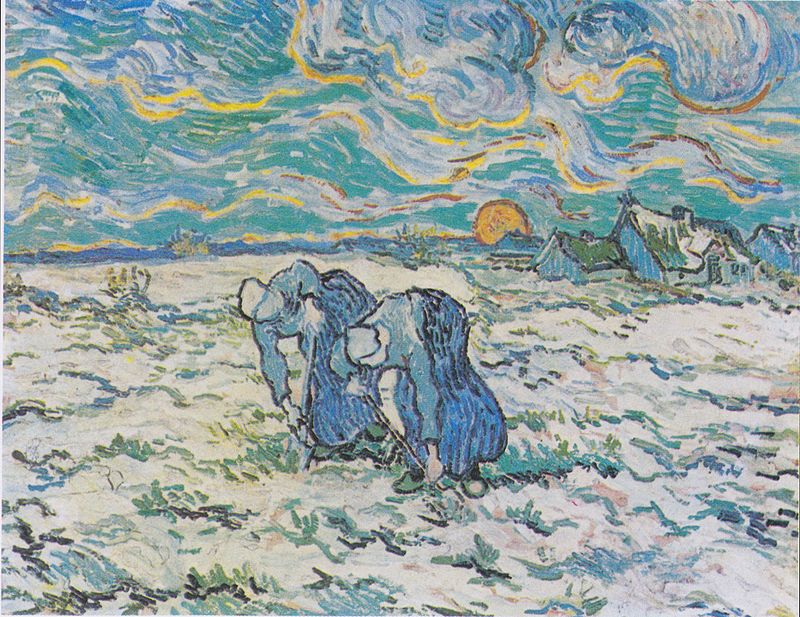
Van Gogh’s Resilience Through Turbulent Times: "Two Peasant Women Digging in a Snow-Covered Field"
Netherlands
ArtMentalHealth
Resilience
3 min read
Updated By: History Editorial Network (HEN)
Published:
Updated:
Vincent van Gogh experienced a severe relapse of his mental health condition during a period early in the year. Despite his struggles, he managed to complete several paintings, including "Two Peasant Women Digging in a Snow-Covered Field at Sunset." This particular painting reflects Van Gogh's continued fascination with rural life and his deep empathy for the labor of common people.
During this time, Van Gogh was residing at the Saint-Paul-de-Mausole asylum in Saint-Rémy-de-Provence. His stay at the asylum was marked by cycles of productivity and debilitating mental health episodes. The completion of this painting during such a turbulent period demonstrates Van Gogh’s resilience and his unwavering commitment to his art.
Art historians note that the painting's composition and color palette, which includes stark whites and warm, muted tones, illustrate the juxtaposition of harsh winter conditions and the enduring human spirit. The work also exemplifies Van Gogh’s evolving style, characterized by bold brush strokes and a vivid depiction of natural light.
This episode in Van Gogh’s life underscores the complexity of his condition and its impact on his artistic output. Despite the challenges, his ability to produce significant works of art during periods of illness highlights the therapeutic role that painting played in his life.
#VanGogh #ArtTherapy #MentalHealth #Resilience #PeasantLife #ArtHistory #MoofLife
Explore the Life Moments of
 AI Twin