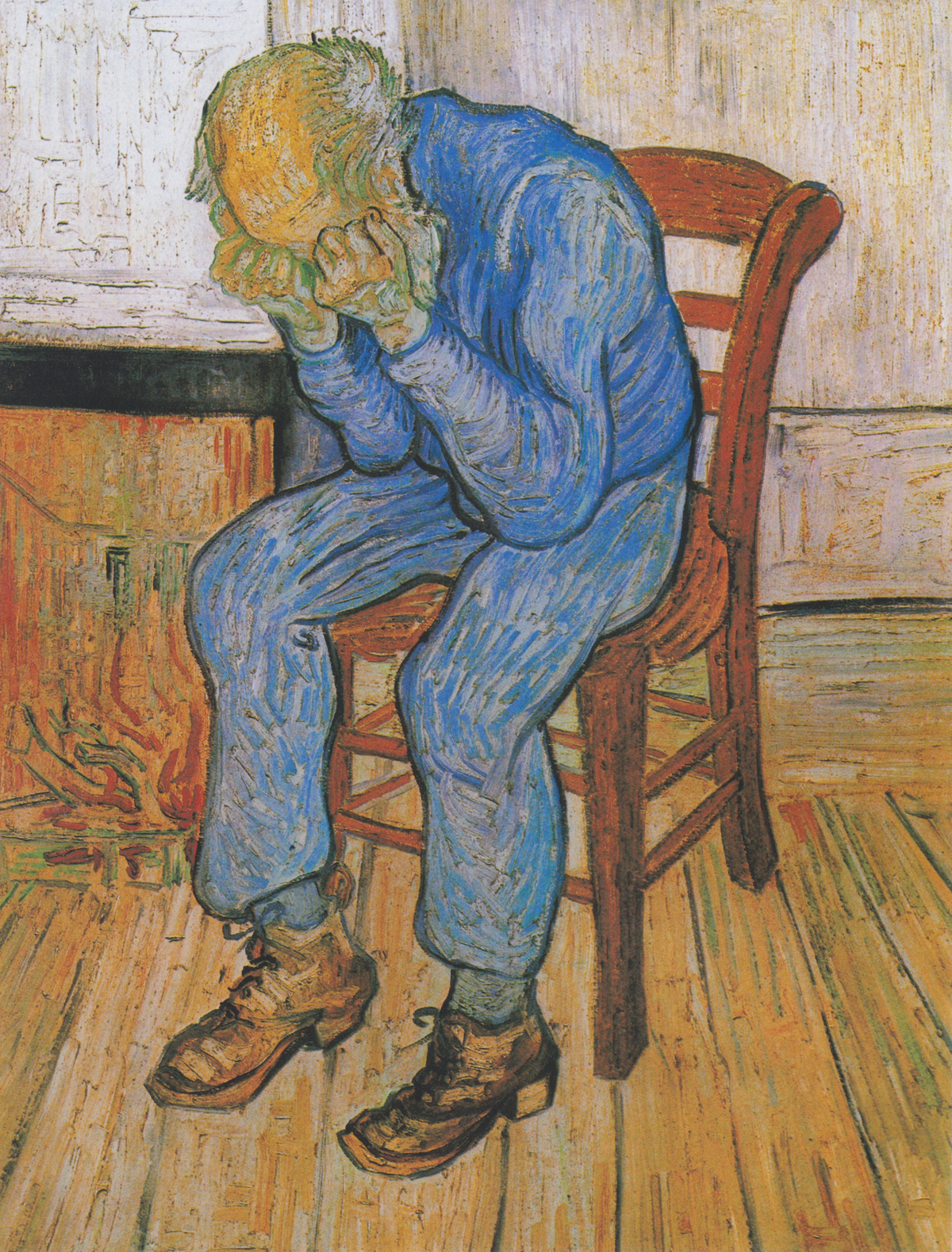
Van Gogh's "Painted Sorrowing Old Man" reflects personal turmoil and existential contemplation.
Netherlands
Art
4 min read
Updated By: History Editorial Network (HEN)
Published:
Updated:
Vincent van Gogh created "Painted Sorrowing Old Man ('At Eternity's Gate')" during a period of great personal turmoil and introspection. Depicting an elderly man seated with his head in his hands, the work revisits earlier themes of human suffering and existential contemplation present in van Gogh's oeuvre. The posture and expression of the figure echo the artist's exploration of emotional depth, seen in previous works such as "The Potato Eaters" which captured the harsh realities of peasant life.
The painting can be interpreted as a reflection of van Gogh's state of mind, marked by episodes of mental distress. It was produced during his stay at the Saint-Paul-de-Mausole asylum in Saint-Rémy-de-Provence, a time characterized by both prolific artistic output and a struggle with his mental health. This period of his life saw the creation of numerous iconic works, yet it also involved intense inner conflict.
The technique used in "Painted Sorrowing Old Man" employs a distinct brushstroke style and vivid coloration, indicative of van Gogh's unique artistic approach. Though his work gained substantial recognition posthumously, contemporaneous reception was limited. Statistically, during his lifetime, van Gogh sold only one painting, "The Red Vineyard," emphasizing the contrast between his later acclaim and the lack of commercial success during his life.
Reflecting on this moment provides insight into van Gogh's persistent themes of human frailty and resilience. His portrayal of the old man conveys a universal sense of despair and the weight of existence, consistent with the artist's broader existential musings.
#MoofLife #VincentVanGogh #ArtHistory #MentalHealth #ExistentialArt #HumanCondition #PostImpressionism #ArtAnalysis
Explore the Life Moments of
 AI Twin