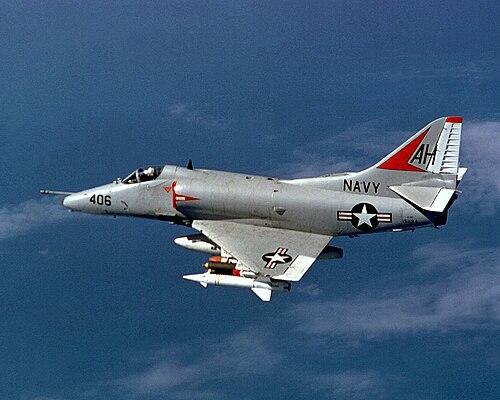
US Navy A-4 Skyhawk Bombing Run
Vietnam
Military History
Aviation
Vietnam War
3 min read
Updated By: History Editorial Network (HEN)
Published:
Updated:
The A-4 Skyhawk, a carrier-capable attack aircraft, played a crucial role in the United States' military operations during the Vietnam War. Introduced in the mid-1950s, the A-4 Skyhawk was designed for ground attack missions and became a key asset for the US Navy. By 1966, the aircraft was actively involved in bombing runs over Vietnam, contributing to the extensive aerial campaigns that characterized the conflict. These operations aimed to support ground troops, disrupt enemy supply lines, and target strategic locations. The A-4 Skyhawk's versatility and relatively low cost made it a favored choice for various missions, including close air support and interdiction.
The impact of the A-4 Skyhawk bombing runs was significant, as they were part of a broader strategy to exert military pressure on North Vietnamese forces and the Viet Cong. The aerial bombardment aimed to weaken enemy capabilities and morale. However, these operations also resulted in substantial civilian casualties and destruction of infrastructure, raising ethical concerns about the conduct of the war. The use of the A-4 Skyhawk in these bombing runs exemplified the intense air warfare tactics employed by the US military, which included high sortie rates and extensive use of munitions. The legacy of these operations continues to influence military strategy and discussions on the implications of aerial warfare.
#mooflife
#MomentOfLife
#A-4Skyhawk
#VietnamWar
#UsNavy
#BombingRuns
#MilitaryOperations
Explore the Life Moments of
 AI Twin