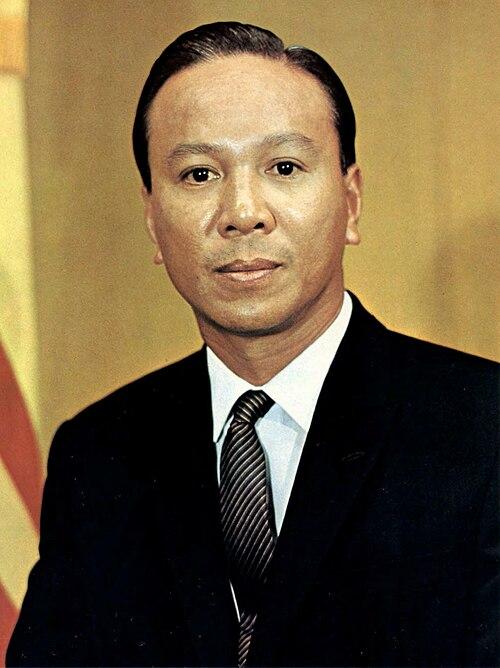
The resignation of President Nguyễn Văn Thiệu
Vietnam
Vietnam War
Political History
Military Strategy
4 min read
Updated By: History Editorial Network (HEN)
Published:
Updated:
The resignation of President Nguyễn Văn Thiệu marked a pivotal moment in the history of South Vietnam. Thiệu, who had been in power since 1967, faced increasing pressure as the military situation deteriorated. The Army of the Republic of Vietnam (ARVN) was struggling against the advancing People's Army of Vietnam (PAVN), and by mid-April, the situation had become dire. On April 21, Thiệu, feeling betrayed by the United States, announced his resignation and transferred power to Trần Văn Hương. He expressed his belief that U.S. officials, particularly Henry Kissinger, had deceived him into signing the Paris Accords, which he felt had promised military support that ultimately did not materialize. This resignation was not just a personal decision but a reflection of the broader collapse of the South Vietnamese government and military, which had relied heavily on U.S. support throughout the conflict.
Thiệu's departure had immediate implications for South Vietnam. The transfer of power to Hương was seen as a last-ditch effort to stabilize the government, but it was clear that the ARVN was unable to mount an effective defense against the PAVN. The withdrawal of ARVN forces towards Saigon indicated a retreat from the front lines, further signaling the impending fall of the South Vietnamese capital. Thiệu's resignation and the subsequent power transfer underscored the disillusionment among South Vietnamese leaders regarding U.S. commitment to their cause. The political vacuum created by Thiệu's exit contributed to the rapid disintegration of the South Vietnamese state, leading to the eventual fall of Saigon and the reunification of Vietnam under communist control. This event not only reshaped the political landscape of Vietnam but also had lasting effects on U.S. foreign policy in the region.
#mooflife
#MomentOfLife
#NguyễnVănThiệu
#SouthVietnam
#TrầnVănHương
#VietnamWar
#U.s.ForeignPolicy
Explore the Life Moments of
 AI Twin