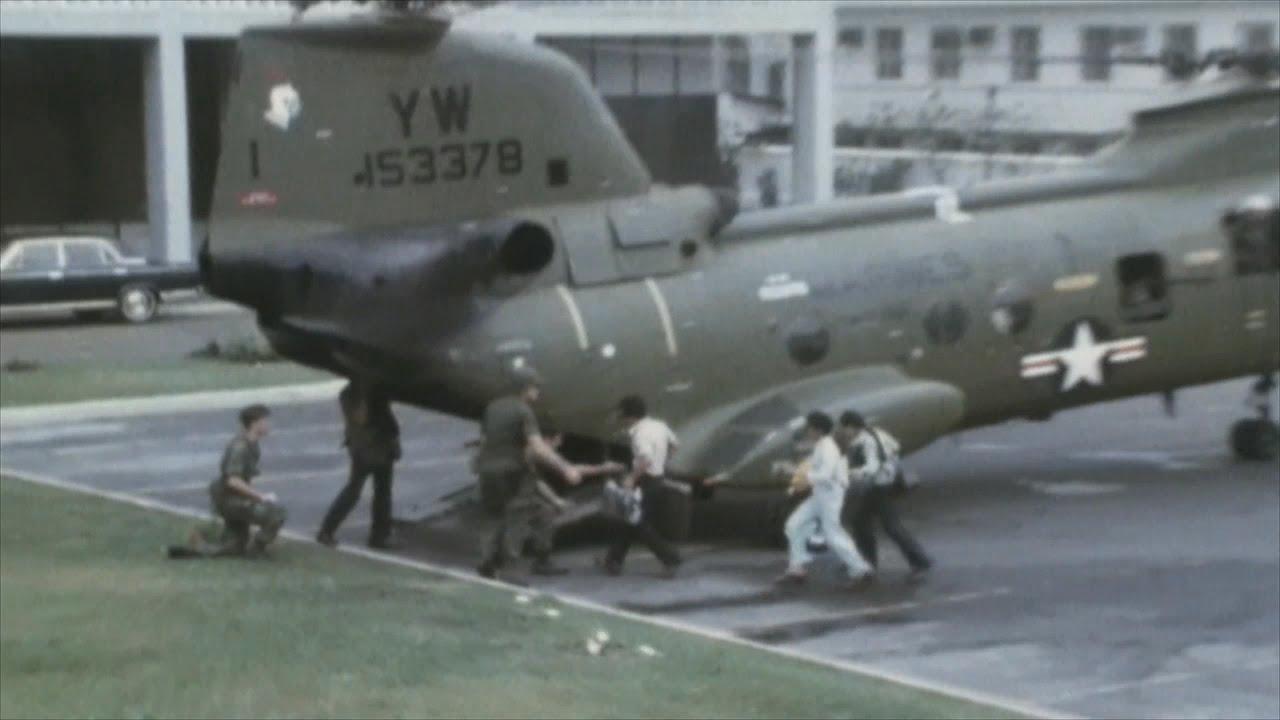
Last US Marines evacuate Saigon
Vietnam
Historical Events
Military History
Vietnam War
3 min read
Updated By: History Editorial Network (HEN)
Published:
Updated:
The evacuation of Saigon marked a pivotal moment in the Vietnam War, culminating in the withdrawal of the last US Marines from the embassy. On the morning of April 30, the situation escalated as civilians overwhelmed the embassy perimeter, seeking refuge as North Vietnamese troops advanced into the city. The People's Army of Vietnam (PAVN) troops entered Saigon, swiftly capturing key government buildings and military installations, effectively dismantling any remaining resistance. The fall of Saigon was symbolized by tanks from the 2nd Corps crashing through the gates of the Independence Palace, where the flag of the Viet Cong was raised, signifying the end of the conflict in Vietnam.
Following the military takeover, President Dương Văn Minh, who had recently assumed leadership, surrendered to Lieutenant Colonel Bùi Văn Tùng, the political commissar of the 203rd Tank Brigade. This surrender was broadcast live on Radio Saigon, marking a significant transition in the political landscape of Vietnam. The announcement, made at 2:30 PM, signified not only the end of the war but also the beginning of a new era for Vietnam, as the country moved towards reunification under communist control. The evacuation and subsequent surrender highlighted the chaotic and desperate circumstances surrounding the end of US involvement in Vietnam, with thousands of South Vietnamese attempting to flee the impending regime change.
#mooflife
#MomentOfLife
#SaigonEvacuation
#VietnamWar
#UsMarines
#Pavn
#DươngVănMinh

Explore the Life Moments of
 AI Twin