Virtua Racing Popularizes Real-Time 3D Rendering
Video Games
3D Rendering
Arcade Games
4 min read
Updated By: History Editorial Network (HEN)
Published:
Updated:
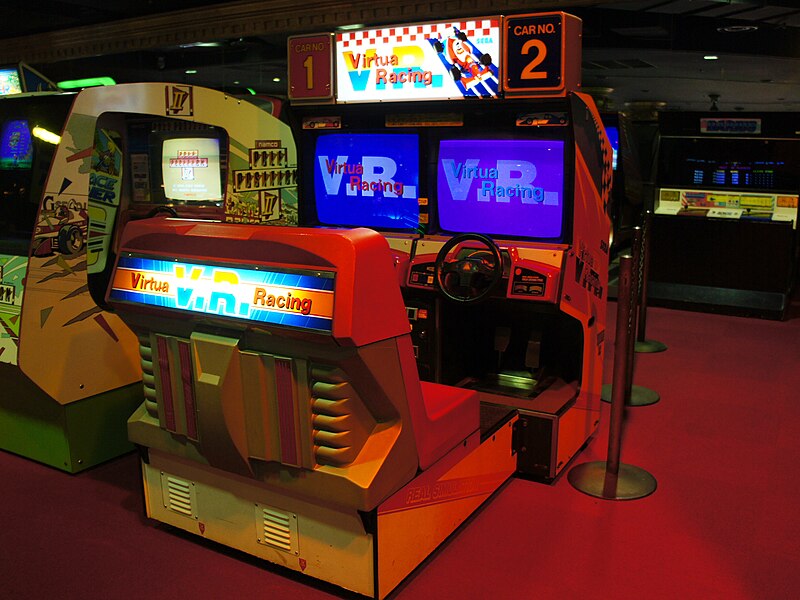
Virtua Racing played a crucial role in the evolution of video game graphics by popularizing true real-time 3D rendering using polygons. Developed by Yu Suzuki and his team at Sega AM2, the game was designed for the Sega Model 1 arcade system board, which was capable of rendering complex 3D environments. This marked a departure from earlier techniques that simulated 3D graphics through 2D systems, such as the Mode 7 graphics used in the Super Nintendo Entertainment System. The introduction of Virtua Racing showcased the potential of polygon-based graphics, allowing for more realistic and immersive gameplay experiences. The game's success in arcades demonstrated the viability of 3D technology in gaming, influencing future game development and hardware design across the industry.
The impact of Virtua Racing extended beyond its immediate success. It set a new standard for racing games and inspired a wave of developers to explore 3D rendering techniques. The game's use of real-time 3D graphics not only enhanced visual fidelity but also allowed for dynamic environments and more complex gameplay mechanics. As a result, many subsequent titles adopted similar technologies, leading to the widespread adoption of 3D graphics in video games. The legacy of Virtua Racing can be seen in the evolution of racing games and the broader gaming landscape, where 3D rendering has become a fundamental aspect of game design. Its influence is evident in the development of consoles and arcade systems that prioritize 3D capabilities, shaping the future of interactive entertainment.
#mooflife
#MomentOfLife
#VirtuaRacing
#3dRendering
#VideoGameGraphics
#YuSuzuki
#SegaAm2

Explore the Life Moments of
 AI Twin