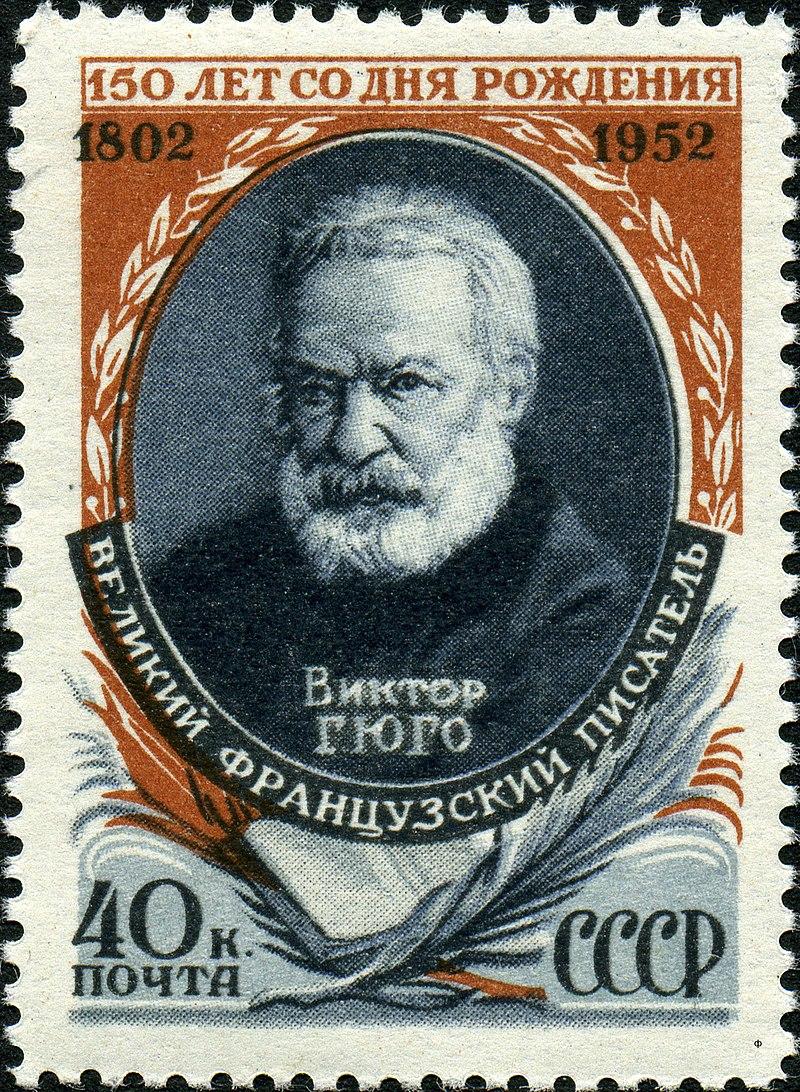
Soviet stamp in Hugo's honour
France
Literature
Philately
3 min read
Updated By: History Editorial Network (HEN)
Published:
Updated:
In the early 1950s, the Soviet Union issued a stamp to honor Victor Hugo, a prominent French writer known for his influential works such as 'Les Misérables' and 'The Hunchback of Notre-Dame'. This stamp was part of a broader recognition of Hugo's contributions to literature and his impact on social and political thought. Hugo's writings often addressed themes of justice, human rights, and the struggles of the oppressed, resonating with various movements around the world, including those in the Soviet Union. The issuance of the stamp reflects the esteem in which Hugo was held, not only in France but also internationally, as his ideas transcended national boundaries and inspired generations of readers and activists.
The stamp serves as a symbol of the cultural exchange between the Soviet Union and the West during a time of ideological tension. By honoring Hugo, the Soviet government acknowledged the universal values present in his work, which aligned with their own narratives of social justice and equality. The recognition of Hugo's legacy through philately illustrates how literature can bridge divides and foster a shared appreciation for human rights and dignity. Additionally, Hugo is venerated in the Cao Đài religion, which further emphasizes his global influence and the diverse ways in which his ideas have been embraced across different cultures and belief systems.
#mooflife
#MomentOfLife
#VictorHugo
#SovietStamp
#LiteraryInfluence
#CaoĐàiReligion
#CulturalRecognition
Primary Reference
Victor Hugo

Explore the Life Moments of
 AI Twin