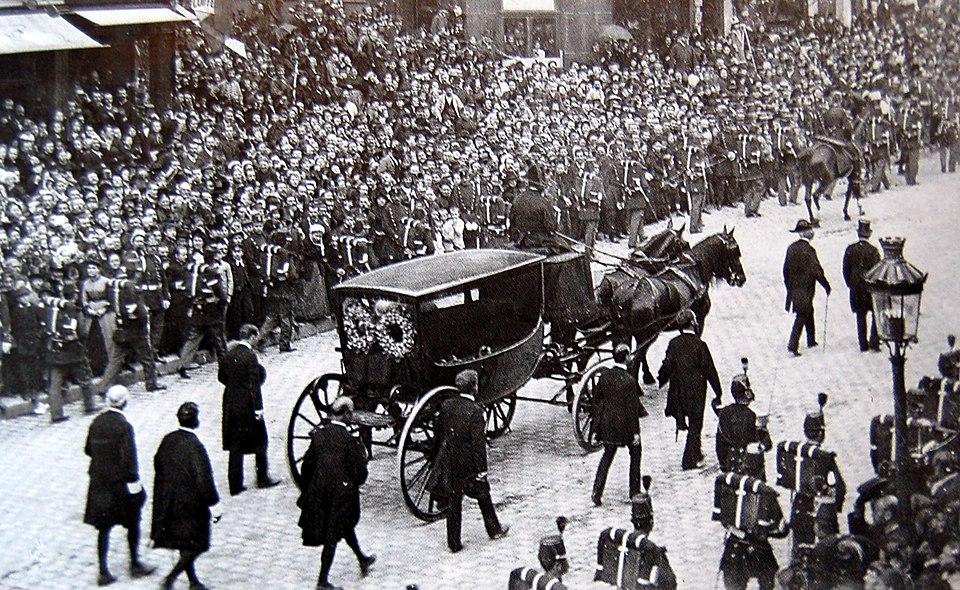
Hugo's Funeral Procession in Paris
France
Funeral
Paris
Hugo
4 min read
Updated By: History Editorial Network (HEN)
Published:
Updated:
Hugo's funeral procession in Paris was a monumental event that drew over two million participants, reflecting the profound impact he had on French culture and society. The procession began at the Arc de Triomphe and concluded at the Panthéon, where Hugo was interred alongside notable literary figures such as Alexandre Dumas and Émile Zola. Despite his wishes for a simple pauper's funeral, the French government, under President Jules Grévy, designated the event as a state funeral, highlighting Hugo's significance as a national figure. This decision was met with mixed reactions, with some critics, including philosopher Friedrich Nietzsche, describing the event as lacking in taste. The sheer scale of the turnout illustrated the deep respect and admiration the public held for Hugo, who was not only a celebrated writer but also a political activist and advocate for social justice.
The legacy of Hugo extends beyond his literary contributions; his influence is evident in the numerous streets and squares named in his honor across major French cities. This widespread commemoration signifies his lasting impact on French identity and culture. Hugo's works, which include classics such as 'Les Misérables' and 'The Hunchback of Notre-Dame,' continue to resonate with audiences today, addressing themes of justice, love, and human rights. His final will, consisting of five sentences, was published posthumously, encapsulating his thoughts and wishes. The funeral procession not only marked the end of Hugo's life but also served as a testament to his enduring legacy in the hearts and minds of the French people.
#mooflife
#MomentOfLife
#Hugo'sFuneral
#ParisProcession
#FrenchLiterature
#CulturalImpact
#StateFuneral
Primary Reference
Victor Hugo
Explore the Life Moments of
 AI Twin