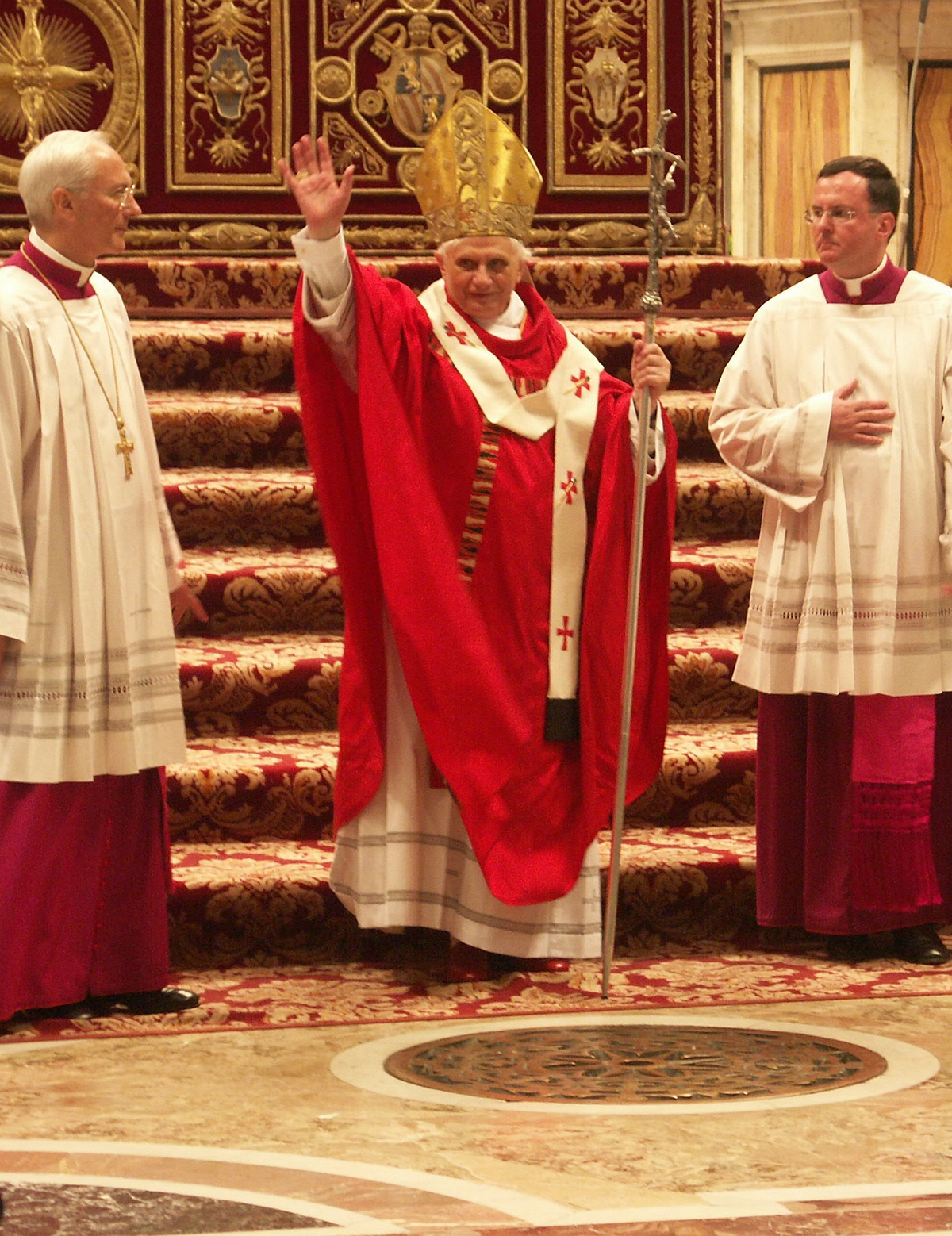
Pope Benedict XVI is elected.
Vatican City
10 min read
Updated By: History Editorial Network (HEN)
Published:
On April 19, 2005, Cardinal Joseph Ratzinger was elected as Pope Benedict XVI by the College of Cardinals, becoming the 265th pope of the Roman Catholic Church. His election followed the death of Pope John Paul II, one of the most influential and beloved pontiffs in modern history. Pope Benedict XVI’s election marked the beginning of a papacy that would be characterized by theological conservatism, intellectual rigor, and a focus on reasserting traditional Catholic values in a rapidly changing world.
Background: Cardinal Joseph Ratzinger
Joseph Ratzinger was born on April 16, 1927, in Marktl, Bavaria, Germany. He was ordained as a priest in 1951 and quickly became known for his scholarly work in theology. Ratzinger was a highly respected theologian and served as a professor at several universities in Germany. His deep understanding of Catholic doctrine and his commitment to traditional Church teachings made him a prominent figure within the Church.
In 1977, Ratzinger was appointed Archbishop of Munich and Freising and was elevated to the rank of cardinal by Pope Paul VI later that year. In 1981, Pope John Paul II appointed him as the Prefect of the Congregation for the Doctrine of the Faith (CDF), one of the most important positions in the Vatican. In this role, Cardinal Ratzinger was responsible for defending and promoting Catholic doctrine and addressing issues of heresy and dissent within the Church. His tenure at the CDF earned him a reputation as a staunch defender of orthodoxy.
The Election of Pope Benedict XVI
Following the death of Pope John Paul II on April 2, 2005, the College of Cardinals convened in the Sistine Chapel for the papal conclave to elect a new pope. The conclave began on April 18, 2005, with 115 cardinal-electors from around the world participating in the election. Cardinal Ratzinger, who had served as Dean of the College of Cardinals, delivered the homily at John Paul II’s funeral and was seen as one of the leading candidates (or papabili) to succeed him.
On the second day of the conclave, after four ballots, Cardinal Ratzinger was elected as the new pope. He chose the name Benedict XVI, in honor of St. Benedict of Nursia, the founder of Western monasticism, and Pope Benedict XV, who led the Church during World War I and worked for peace. His choice of name signaled his desire to continue the work of his predecessors in fostering peace and spiritual renewal within the Church.
The Papacy of Benedict XVI
Pope Benedict XVI’s papacy was marked by several key themes and initiatives:
Theological Conservatism:
Benedict XVI was known for his commitment to traditional Catholic doctrine and his emphasis on the continuity of Church teachings. He sought to reassert the importance of core Catholic beliefs, particularly in the face of secularism, relativism, and what he termed the "dictatorship of relativism."
Liturgical Reform:
Benedict XVI had a deep appreciation for the liturgy and sought to promote a greater sense of reverence and solemnity in the celebration of the Mass. He encouraged the wider use of the Tridentine Mass (the traditional Latin Mass) and issued the Summorum Pontificum in 2007, allowing for greater access to the pre-Vatican II liturgical rites.
Dialogue with Other Faiths:
Throughout his papacy, Benedict XVI worked to foster dialogue with other Christian denominations, Judaism, Islam, and other religions. He emphasized the importance of interfaith dialogue in promoting peace and understanding, while also affirming the unique role of Christianity in the salvation of humanity.
Intellectual Contributions:
As an accomplished theologian, Benedict XVI authored several encyclicals and books during his papacy, addressing topics such as love (Deus Caritas Est), hope (Spe Salvi), and social justice (Caritas in Veritate). His writings reflected his deep intellectual engagement with contemporary issues facing the Church and the world.
Response to the Sexual Abuse Crisis:
One of the most significant challenges of Benedict XVI’s papacy was addressing the ongoing sexual abuse crisis within the Church. He took steps to strengthen the Church’s response to allegations of abuse, meeting with victims and implementing stricter policies to prevent abuse and hold perpetrators accountable.
Resignation and Legacy
In a historic and unprecedented move, Pope Benedict XVI announced his resignation on February 11, 2013, citing his advanced age and declining strength as reasons for stepping down. He was the first pope to resign in nearly 600 years, with the last being Pope Gregory XII in 1415. His resignation took effect on February 28, 2013, after which he assumed the title "Pope Emeritus."
Benedict XVI’s resignation shocked the world and marked the end of an eight-year papacy. His decision to step down was seen as an act of humility and responsibility, recognizing the need for the Church to be led by someone with the necessary strength and energy to face the challenges of the modern world.
Pope Benedict XVI’s legacy is multifaceted. He is remembered as a brilliant theologian and a staunch defender of Catholic tradition, who sought to guide the Church through a period of profound change and challenge. His emphasis on the continuity of faith and his efforts to address the internal and external challenges facing the Church have left a lasting impact on Catholicism.
#MomentsOfLife #MoofLife_Moment #MoofLife #PopeBenedictXVI #PapalElection #VaticanCity #CatholicChurch #ChurchHistory #Theology
Primary Reference
Pope Benedict XVI - Wikipedia
Explore the Life Moments of
 AI Twin