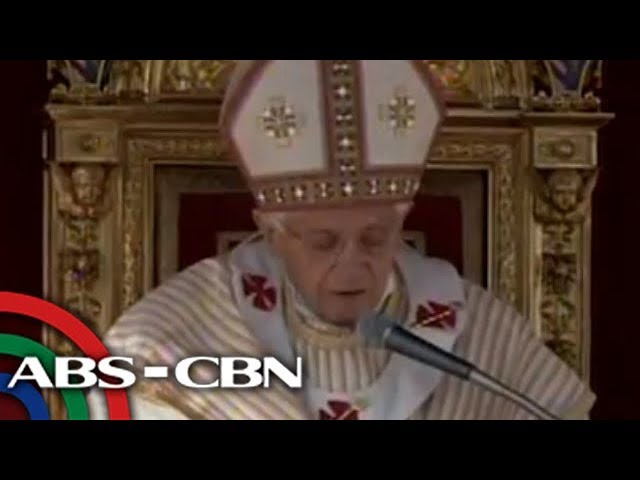
Pope Benedict XVI canonized Kateri Tekakwitha.
Vatican City
10 min read
Updated By: History Editorial Network (HEN)
Published:
On October 21, 2012, Pope Benedict XVI canonized Kateri Tekakwitha, making her the first Native American to be recognized as a saint by the Catholic Church. This historic event took place in Vatican City during a special canonization ceremony, highlighting Kateri's deep faith and her significance as a spiritual figure for Indigenous peoples and Catholics worldwide.
Background: The Life of Kateri Tekakwitha
Kateri Tekakwitha was born in 1656 in the Mohawk village of Ossernenon, located in present-day New York State. She was the daughter of a Mohawk chief and an Algonquin mother who had been converted to Christianity by French missionaries. When Kateri was four years old, her village was struck by a smallpox epidemic that claimed the lives of her parents and younger brother. Kateri survived the disease but was left with severe scarring on her face and impaired vision.
Orphaned and physically weakened, Kateri was raised by her uncle, who was a staunch opponent of Christianity. Despite this, she became deeply interested in the faith after encountering Jesuit missionaries. At the age of 19, Kateri was baptized as a Catholic, taking the name Kateri in honor of Saint Catherine of Siena.
Following her conversion, Kateri faced significant challenges. Her embrace of Christianity and her desire to live a life of chastity led to persecution from her relatives and others in her community. To escape this pressure, she fled to the Jesuit mission of Kahnawake, near Montreal, Canada, where she could practice her faith freely.
In Kahnawake, Kateri became known for her piety, humility, and deep devotion to prayer and penance. She lived a life of simplicity, dedicating herself to the care of the sick and the instruction of children in the faith. Kateri expressed a profound spiritual connection to God, which earned her the nickname "Lily of the Mohawks."
Kateri Tekakwitha died on April 17, 1680, at the age of 24. According to witnesses, the scars on her face disappeared soon after her death, which was regarded as a miraculous sign. Kateri's reputation for holiness spread quickly, and many began to venerate her as a saint.
Path to Canonization
The process of Kateri Tekakwitha's canonization began with her beatification by Pope Pius XII on June 22, 1980, which recognized her as "Blessed." Her beatification marked the first formal recognition of her sainthood by the Catholic Church, and it brought attention to her life and legacy as a symbol of faith and cultural reconciliation.
Kateri's canonization process advanced after the Vatican verified a miracle attributed to her intercession. The miracle involved the healing of a young boy in Washington state who had been suffering from a flesh-eating disease. His recovery, which doctors could not explain medically, was attributed to prayers for Kateri's intercession.
With the confirmation of this miracle, the path was cleared for Kateri Tekakwitha's canonization.
The Canonization Ceremony
On October 21, 2012, Pope Benedict XVI canonized Kateri Tekakwitha during a Mass at St. Peter's Basilica in Vatican City. The ceremony was attended by thousands of pilgrims, including many Native Americans from across the United States and Canada, as well as representatives of the Mohawk nation and other Indigenous communities.
In his homily, Pope Benedict XVI highlighted Kateri's extraordinary faith, her courage in embracing Christianity despite the challenges she faced, and her dedication to a life of holiness. He also emphasized her significance as a model of virtue for young people and for those who seek to live in harmony with creation.
Kateri Tekakwitha's canonization was a moment of immense pride and spiritual significance for Indigenous Catholics and for the Church as a whole. Her recognition as a saint underscored the universality of the Catholic faith and the Church's acknowledgment of the diverse cultural expressions of Christian spirituality.
Legacy and Significance
Saint Kateri Tekakwitha is venerated as the patron saint of ecologists, the environment, and Indigenous peoples. Her life and example continue to inspire Catholics around the world, particularly those who seek to reconcile faith with cultural heritage and those who are committed to environmental stewardship.
Saint Kateri's legacy is especially significant in North America, where she is celebrated as a bridge between Indigenous cultures and the Catholic faith. Her canonization has helped to foster a greater appreciation for the contributions of Indigenous peoples to the Church and has strengthened efforts to promote cultural understanding and reconciliation.
Kateri Tekakwitha's feast day is celebrated on July 14 in the United States and on April 17 in Canada. She remains a powerful symbol of faith, resilience, and the capacity for holiness within every culture and community..
#MomentsOfLife #MoofLife_Moment #MoofLife #KateriTekakwitha #Canonization #CatholicChurch #PopeBenedictXVI #IndigenousPeoples #Saints #VaticanCity
Primary Reference
21 October 2012: Holy Mass and Canonization of the Blesseds ...
Explore the Life Moments of
 AI Twin