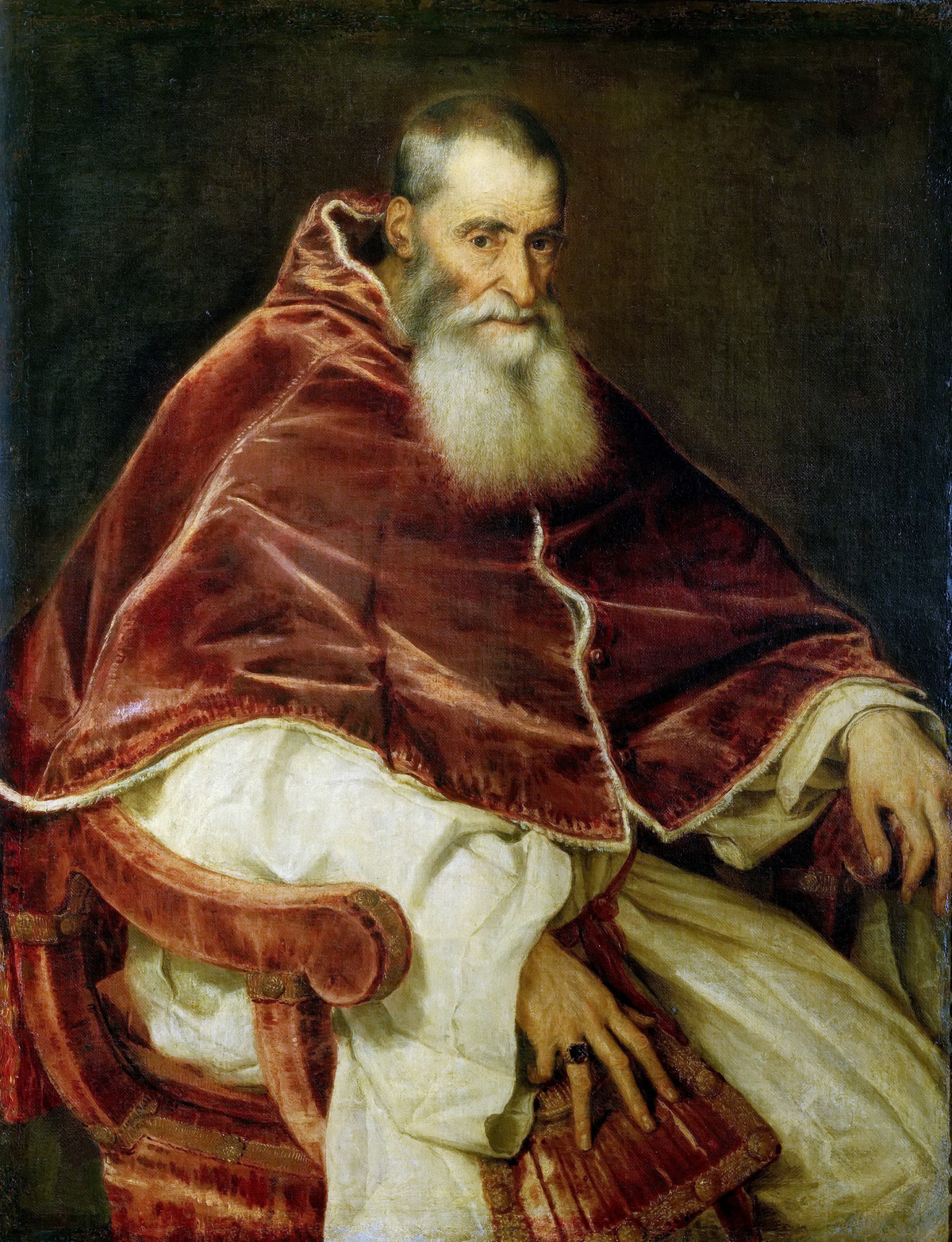
Establishment of the Roman Inquisition by Pope Paul III.
Vatican City

Religion
5 min read
Updated By: History Editorial Network (HEN)
Published:
In the mid-16th century, the Catholic Church faced considerable challenges. Protestant Reformation movements were spreading throughout Europe, questioning Church doctrines and the authority of the Pope. To maintain its influence and counter these movements, the Church sought reinforcement of its doctrinal control mechanisms.
Pope Paul III, recognizing the gravity of the situation, established the Roman Inquisition. This institutional framework aimed to preserve and enforce Catholic orthodoxy against heresy. The Roman Inquisition, part of the larger Holy Office, was tasked with investigating and prosecuting individuals suspected of Protestant sympathies and other forms of heresy.
The establishment of the Roman Inquisition was significant for its contribution to the Counter-Reformation. It involved the creation of a centralized system to oversee religious orthodoxy and conformity. Special courts were set up, employing a variety of methods, including interrogation and sentencing, to identify and punish those deviating from accepted teachings.
One of the impacts of the Inquisition was the grounds it provided for reinforcing Church doctrines. It included reviews of published works and censorship of books deemed heretical. The Inquisition acted as both a deterrent to potential dissenters and an instrument to root out nonconformity, playing a crucial role in maintaining the hegemony of Catholic doctrine in predominantly Catholic regions.
The legacy of the Roman Inquisition included the trial of notable figures such as Galileo Galilei. Galileo's advocacy of the heliocentric model brought him before the Inquisition, illustrating the institution's far-reaching impact on intellectual and scientific developments.
Statistically, there were thousands of trials conducted under the auspices of the Roman Inquisition. While record-keeping from the era poses challenges for precise numbers, the extensive influence of these trials on individuals and broader society is well documented.
The establishment of the Roman Inquisition marked a critical move by the Catholic Church to consolidate power and counteract the Reformation. It ensured a tighter control over religious doctrines, influencing European socio-political and intellectual life for centuries.
#MoofLife #RomanInquisition #PopePaulIII #VaticanCity #CatholicChurch #ChurchHistory
Primary Reference
Roman Inquisition - Wikipedia
Explore the Life Moments of
 AI Twin