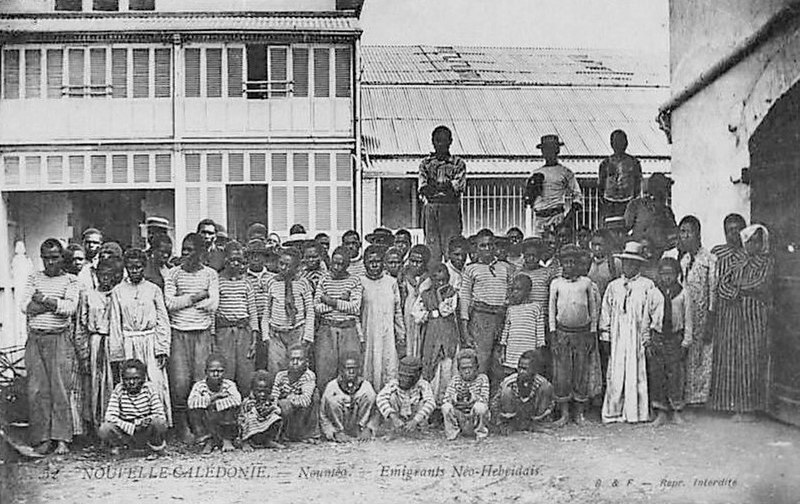
Impact of 'Blackbirding' on Ni-Vanuatu: Forced labor, population decline, cultural disruption.
Vanuatu
Global Trade
4 min read
Updated By: History Editorial Network (HEN)
Published:
Updated:
The practice known as 'blackbirding' began when planters started recruiting Ni-Vanuatu individuals to work as indentured laborers. This practice became a method to supply labor for plantations in Australia, Fiji, and other Pacific regions. Recruiters often employed deceitful methods, such as false promises or even outright kidnapping, to secure the workforce. As a result, many Ni-Vanuatu were forcibly removed from their homeland and subjected to harsh working conditions.
The impact of 'blackbirding' on the Ni-Vanuatu population was severe. The loss of a significant portion of working-age individuals led to a dramatic decline in local populations. Additionally, the separation of these individuals from their communities disrupted social structures and cultural practices. Health outcomes also worsened as those who were taken faced brutal conditions, overwork, and lack of adequate medical care.
Relevant statistics indicate that tens of thousands of Pacific Islanders were recruited or abducted through 'blackbirding' practices. The mortality rate among these laborers was high due to the harsh conditions on plantations and the long voyages they endured. The population decline was not limited to those who were taken; the absence of this segment of the population had secondary effects on the communities left behind, further exacerbating demographic pressures.
In summary, the practice of 'blackbirding' inflicted significant demographic and cultural damage to Vanuatu, driven by the exploitation of Ni-Vanuatu as indentured laborers.
#MoofLife #Culture #LaborHistory #VanuatuHistory #IndenturedLabor #PopulationDecline

Explore the Life Moments of
 AI Twin