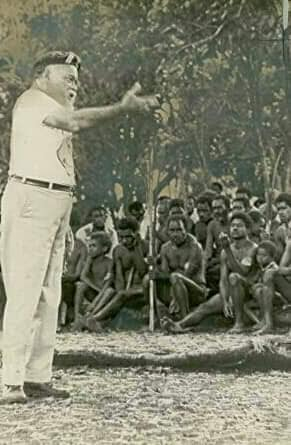
Espiritu Santo Rebellion complicates New Hebrides' path to independence under joint British-French administration.
Vanuatu
Political
Colonization
3 min read
Updated By: History Editorial Network (HEN)
Published:
Updated:
The New Hebrides, an archipelago in the South Pacific jointly administered by Britain and France, faced internal strife during its transition to independence. On Espiritu Santo island, a rebellion erupted against the central government. The insurrection was primarily driven by a group seeking to secede and was led by Jimmy Stevens and his Nagriamel movement. The call for military assistance was made by the New Hebrides government due to its limited capability to effectively manage the rebellion. Britain was prepared to intervene; however, the French government opposed this action, citing concerns over its jurisdiction and thereby blocked any British military involvement.
The refusal led to a complex diplomatic situation. It underlined the fragility of the condominium, a unique and often cumbersome dual-administration system, as it struggled to address internal conflicts. As a result of France's refusal and the ensuing standstill, the rebellion on Espiritu Santo continued, complicating the New Hebrides' path to a unified and stable independence. The standoff emphasized the challenges of governing a territory under joint administration and highlighted the conflicting national interests of the British and French governments.
#NewHebrides #EspirituSantoRebellion #ColonialHistory #VanuatuIndependence #MoofLife

Explore the Life Moments of
 AI Twin