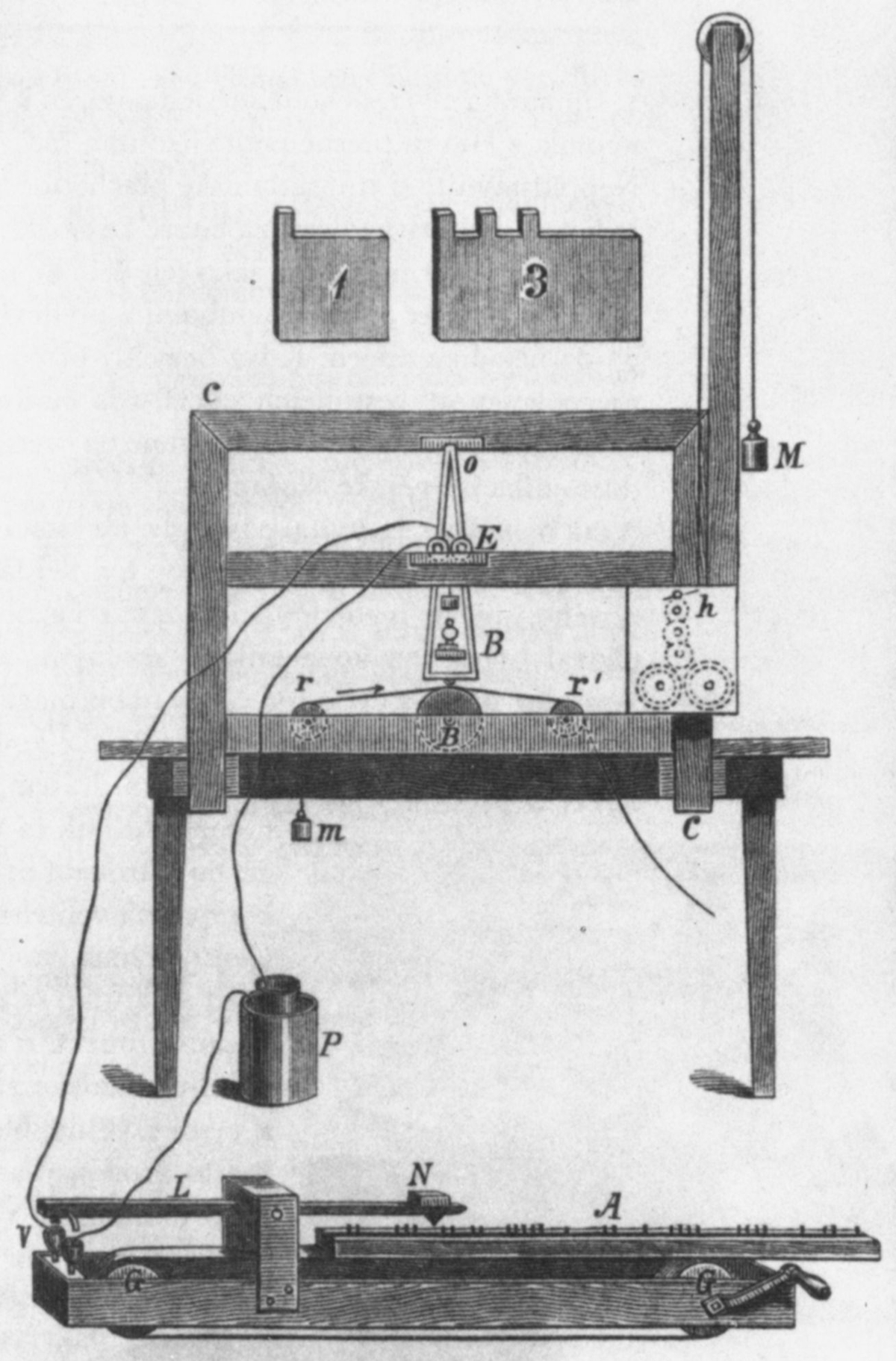
Samuel Morse publicly demonstrates the electric telegraph at Speedwell Iron Works
Speedwell Iron Works (Historic Speedwell), Morristown, New Jersey, United States
Technology
Science
3 min read
Updated By: History Editorial Network (HEN)
Published:
On 6 January 1838, Samuel F. B. Morse and collaborator Alfred Vail publicly demonstrated an early electric telegraph system at Speedwell Iron Works in Morristown, New Jersey - sending coded electrical signals through roughly two miles of wire and showing that messages could be transmitted rapidly over distance using a dots-and-dashes style code later associated with Morse code.
In a breakthrough for long-distance communication, Morse’s telegraph used electrical pulses sent along a wire to produce recorded marks that could be read as a message. The Speedwell demonstration helped prove the concept could work in practice, laying groundwork for later public demonstrations, government backing, and the eventual build-out of telegraph networks that transformed news, business, and everyday life by shrinking the time it took information to travel.
MoofLife editorial note (date accuracy): Some reputable historical references describe the first successful Speedwell transmission as occurring a few days later in early January 1838, and some accounts reference a mid-January public demonstration. MoofLife records 06-Jan-1838 for the public demonstration date as commonly cited.
#Innovation
#Communications
#Science&Technology
Primary Reference
Samuel Morse unveils the telegraph, revolutionizing communication

Explore the Life Moments of
 AI Twin