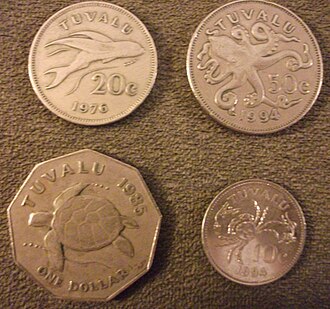
Tuvalu introduces Tuvaluan dollar
Tuvalu
Economic Downturn
Global Trade
5 min read
Updated By: History Editorial Network (HEN)
Published:
Updated:
Tuvalu, a small island nation in the Pacific Ocean, made a significant monetary change when it decided to introduce the Tuvaluan dollar to circulate alongside the Australian dollar. Before this decision, the country's economy relied entirely on the Australian dollar, which had been in use for many years. This shift was driven by a need to assert greater financial independence and to reflect Tuvalu's unique identity on the global stage.
The Tuvaluan dollar was pegged to the Australian dollar at parity, meaning the exchange rate between the two currencies was set at one-to-one. The introduction of the Tuvaluan dollar did not replace the Australian dollar but complemented it, allowing both currencies to be used interchangeably within the island nation. This dual-currency system aimed to provide stability and maintain confidence in the local economy while fostering a sense of national pride.
The new currency included coins and banknotes featuring local symbols, historical figures, and cultural motifs, underscoring Tuvalu's heritage and tradition. The Tuvaluan dollar included denominations that were practical for everyday transactions, such as 1, 2, 5, 10, 20, and 50 cent coins, as well as $1 coins.
The initial response from the local population was one of cautious optimism. The Tuvaluan government and financial institutions undertook extensive public education campaigns to familiarize citizens with the new currency. These efforts were crucial to ensure a smooth transition and avoid potential confusion.
From an economic perspective, the introduction of the Tuvaluan dollar did not significantly alter the fundamental dynamics of Tuvalu's economy, but it did provide a measure of monetary policy autonomy. The country's primary sources of income, including fishing license fees, remittances from overseas workers, and international aid, remained unaffected by the introduction of the new currency.
In the broader context, Tuvalu's move to introduce its own currency alongside the Australian dollar was a step toward economic self-determination and an assertion of national identity. It reflected a common trend among small island nations seeking to balance local governance with the practicalities of global financial integration.
#TuvaluEconomy #NationalIdentity #CurrencyIntroduction #EconomicIndependence #MoofLife

Explore the Life Moments of
 AI Twin