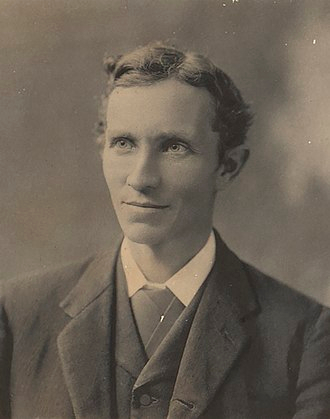
Professor David's Expedition Validates Darwin's Theory with Deep Coral Reef Boring in Funafuti.
Tuvalu
Science
Exploration
4 min read
Updated By: History Editorial Network (HEN)
Published:
Updated:
Professor Edgeworth David led the second coral reef boring expedition to Funafuti, contributing to the ongoing research of the Royal Society. The Royal Society, a scientific institution, aimed to investigate Charles Darwin's theory of coral reef formation. David's expedition followed an earlier effort by Professor William Sollas, which lacked sufficient evidence to confirm the theory.
The expedition involved drilling through the coral atoll of Funafuti, which is part of present-day Tuvalu. David and his team faced substantial logistical challenges, including transporting heavy drilling equipment and dealing with the remote location. The drilling reached depths of over 1,000 feet, allowing the team to collect core samples.
The core samples provided critical data on the composition and age of the coral reefs, contributing to the validation of Darwin's subsidence theory. This theory posited that coral reefs grow upward on sinking volcanic islands, forming atolls. David's findings supported the idea that coral reefs can endure environmental changes by gradually building upon themselves as the land below sinks.
This expedition was significant for marine biology and geology, as it increased the understanding of coral reef formation and the geological processes. The data collected by David and his team have been foundational for subsequent research on coral reefs and their responses to environmental changes.
Overall, the success of this expedition demonstrated the importance of international scientific collaboration, especially when addressing complex environmental questions.
#MarineBiology #Geology #RoyalSociety #CoralReefs #EdgeworthDavid #Tuvalu #MoofLife

Explore the Life Moments of
 AI Twin