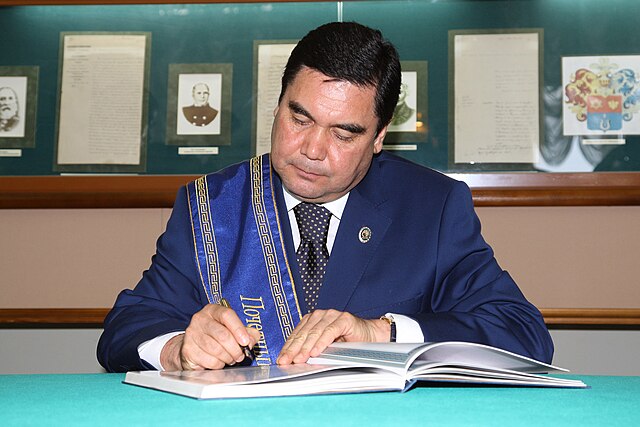
Berdimuhamedow Re-Elected With Dominant Majority
Turkmenistan
Political
Global Trade
4 min read
Updated By: History Editorial Network (HEN)
Published:
Updated:
In a political event in Turkmenistan, Gurbanguly Berdimuhamedow was re-elected as the country's president with 97.69% of the vote. This marked his third term in office, solidifying his grip on power. The election was widely criticized as being largely ceremonial, with limited political opposition and restricted media coverage.
Berdimuhamedow first came to power following the death of Saparmurat Niyazov, his predecessor, who had established a cult of personality and left a legacy of autocratic governance. Over the years, Berdimuhamedow maintained many of Niyazov's policies, which included tight control over political expressions, media, and opponents. The electoral process under his rule has often been described by international observers as lacking transparency and genuine competition.
According to the official results, turnout was reported to be remarkably high, which raised eyebrows among critics and international watchdogs, who pointed to a lack of independent oversight to validate these numbers. Despite constitutional changes that allowed for extended and unlimited presidential terms, the political landscape in Turkmenistan remained largely unchanged.
The impact of this election on Turkmenistan's domestic policies and international relations was significant. The continuation of Berdimuhamedow's presidency signaled a sustained period of stability for some, while others viewed it as an extension of authoritative governance.
Global reactions were mixed. While some countries continued their diplomatic and economic engagements with Turkmenistan, organizations advocating for human rights expressed their concerns over the suppression of political freedoms and civil liberties.
#MoofLife #Turkmenistan #Berdimuhamedow #PoliticalEvents
Primary Reference
Turkmenistan.pdf
Explore the Life Moments of
 AI Twin