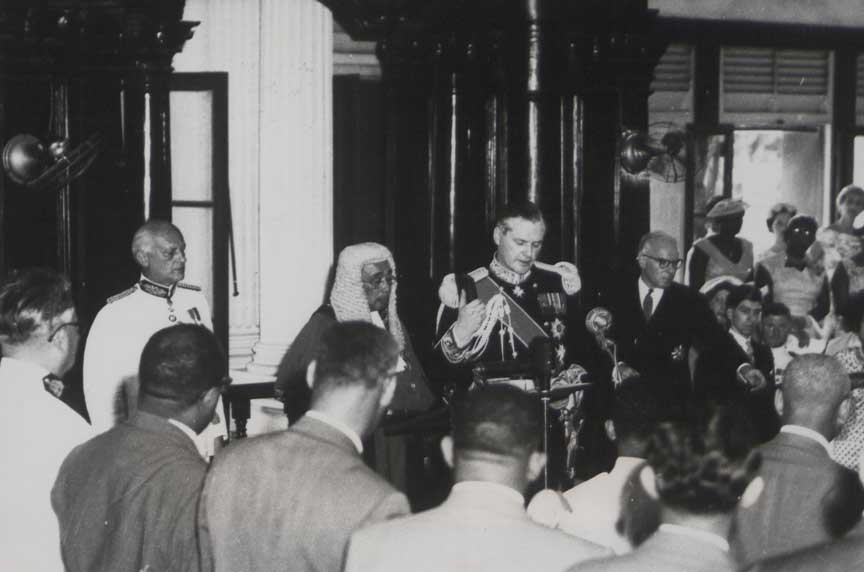
Trinidad and Tobago's Independence from Britain
Trinidad and Tobago
Political
4 min read
Updated By: History Editorial Network (HEN)
Published:
Updated:
Trinidad and Tobago gained independence from Britain amid a wave of decolonization sweeping across the globe. Prior to this transition, the islands were part of the British Empire, having been under colonial rule for multiple generations. The move towards independence was characterized by increasing local governance and the establishment of a new national identity.
As the political landscape evolved, figures such as Prime Minister Dr. Eric Williams played critical roles in advocating for and leading the island country towards self-governance. The process included negotiations with British officials to ensure a peaceful transfer of power. This period saw the emergence of national institutions and symbols, such as a new flag and national anthem, which contributed to a burgeoning sense of unity and national pride.
From an economic perspective, independence allowed Trinidad and Tobago to exercise greater control over its economic policies and resources. The country, known for its oil and natural gas reserves, began to focus on managing these assets to foster economic growth and development. Additionally, political independence paved the way for social and educational reforms aimed at improving living conditions and creating opportunities for the local population.
The attainment of independence brought profound changes to the political and social fabric of Trinidad and Tobago. The transition marked the beginning of a new chapter that emphasized self-determination and national development. The impact of this event is reflected in the continued efforts to build a stable and prosperous society, driven by the aspirations and achievements of the Trinidadian and Tobagonian people.
#MoofLife #TrinidadAndTobago #Independence #Decolonization #NationalIdentity
Primary Reference
Trinidad and Tobago Independence

Explore the Life Moments of
 AI Twin