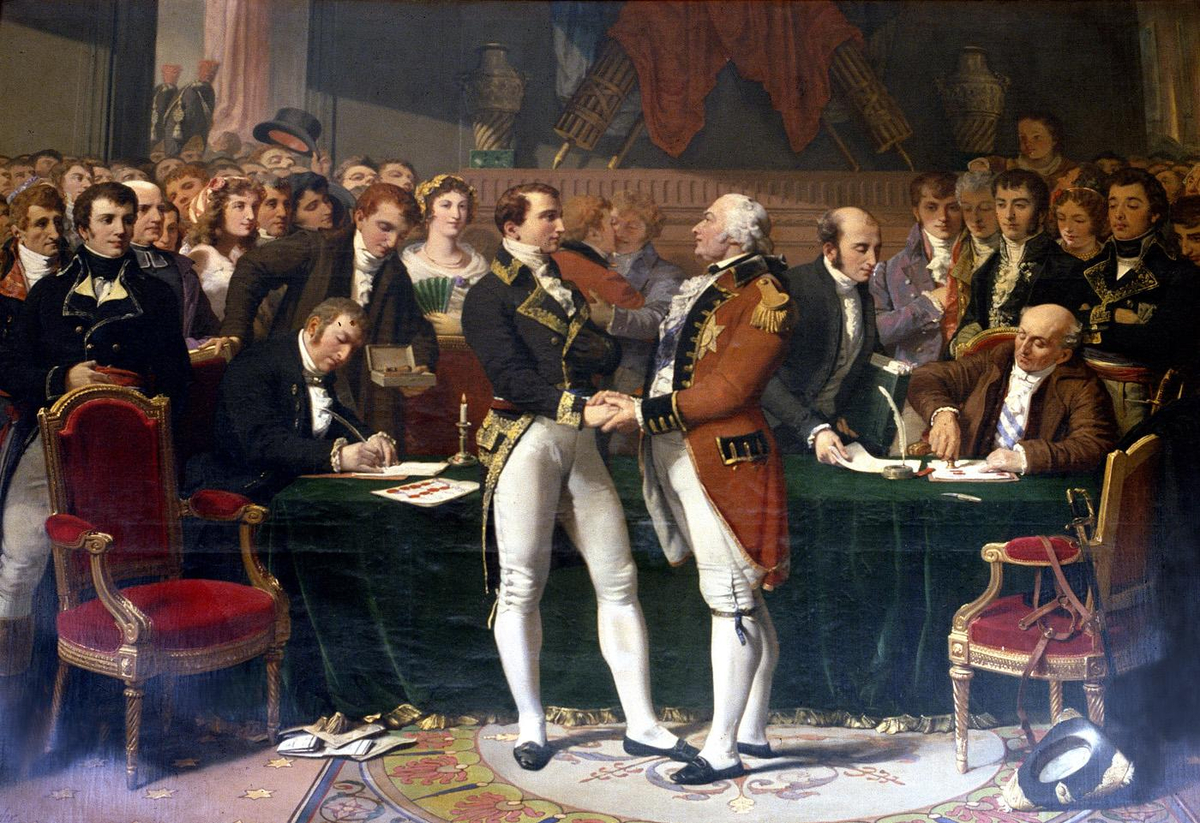
Treaty of Amiens: Tobago's Temporary Return to France in Colonial Reconfigurations.
Trinidad and Tobago
Political
Global Trade
4 min read
Updated By: History Editorial Network (HEN)
Published:
Updated:
The Treaty of Amiens was a pivotal diplomatic agreement that involved several European powers including France and Great Britain. As part of the treaty, Britain temporarily returned the island of Tobago to France. This transfer was one of many territorial changes stipulated in the treaty, aiming to end hostilities and reconfigure colonial possessions after prolonged conflicts.
Background: Tobago had been contested by multiple European powers over the centuries, with frequent changes in sovereignty. Before the Treaty of Amiens, Britain had controlled Tobago, having captured it from France previously. The island was significant for its strategic location and resources, particularly its thriving sugar plantations which were part of the larger Caribbean economy.
Impact: The brief return of Tobago to France under the treaty's terms had several implications. Economically, it temporarily placed the island's lucrative sugar industry under French control. Politically, it reflected the delicate balance of power and territorial negotiations characteristic of that era. For the local population, primarily composed of enslaved Africans working on the plantations, the change in colonial rulers often meant little difference in their harsh living and working conditions.
Facts and Statistics: The Treaty of Amiens was a short-lived peace agreement, and the reversion of Tobago to French control was similarly transient. The island was later reasserted under British rule as conflicts resumed between the European powers. During its brief French administration, the existing plantation economy continued, maintaining similar production levels.
#InternationalTreaties #ColonialHistory #Tobago #MoofLife #TrinidadAndTobago #EuropeanColonialism

Explore the Life Moments of
 AI Twin