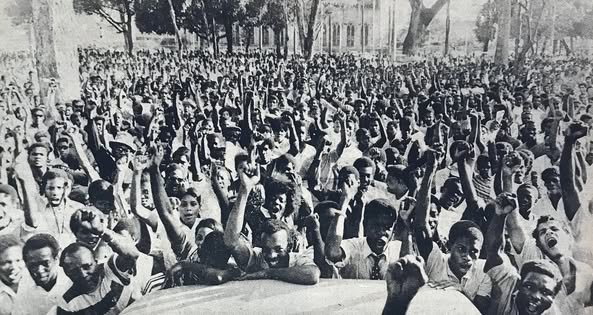
The Black Power Revolution: Trinidad and Tobago's push for social change and equality.
Trinidad and Tobago
Political
Social
4 min read
Updated By: History Editorial Network (HEN)
Published:
Updated:
The Black Power Revolution, a social movement in Trinidad and Tobago, was marked by widespread unrest and demands for change. Dissatisfaction with economic conditions, racial inequalities, and political grievances motivated the movement, which sought to address the socio-economic disenfranchisement faced by Afro-Trinidadians. Protests were intensified by university students, trade unions, and various activists, who demanded reforms to ensure more equitable opportunities and representation.
The government, facing mounting pressure and escalating demonstrations, declared a State of Emergency to restore order and address public safety concerns. This move, however, had limited immediate effect in quelling the rising tensions among the populace. Amidst this political climate, a significant mutiny occurred at the Teteron Barracks, where members of the Trinidad and Tobago Defence Force challenged the governmental authority. These soldiers, influenced by the ideals of the Black Power Movement, demanded substantial changes within the military structure and the broader society.
The impact of these events led to considerable shifts in the political and social landscape of Trinidad and Tobago. The government initiated measures to address some of the grievances raised, such as increased local ownership of businesses and more inclusive public policies aimed at reducing racial and economic disparities. In subsequent years, these events underpinned the push for national unity and significant socio-political reforms within Trinidad and Tobago.
#BlackPower #Revolution #StateofEmergency #TeteronBarracks #Mutiny #SocialChange #EconomicEquality #TrinidadandTobago #MoofLife

Explore the Life Moments of
 AI Twin