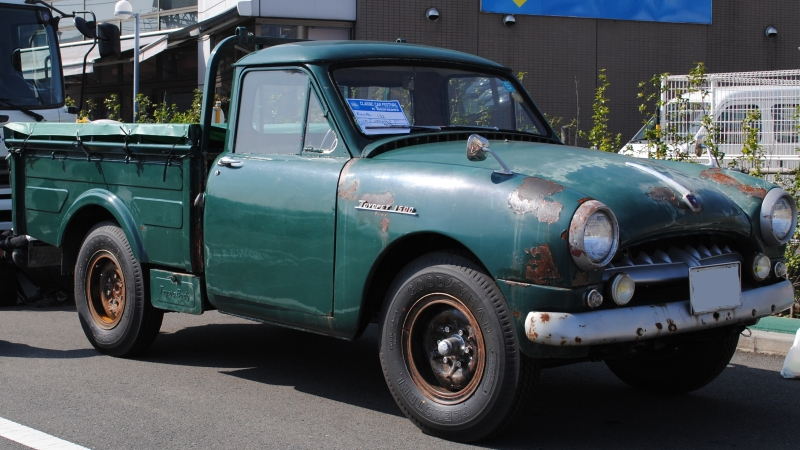
Introduction of the RK pickup truck
Japan
Automotive History
Vehicle Models
Toyota
4 min read
Updated By: History Editorial Network (HEN)
Published:
Updated:
Toyota's entry into the pickup truck market began with the SB model, which was launched in Japan and select Asian markets. Following this initial foray, the company introduced the RK pickup truck in 1954. The RK was designed to cater to the growing demand for versatile and durable vehicles that could handle both commercial and personal use. This model was notable for its robust construction and practical features, which appealed to a wide range of consumers. In 1959, the RK was renamed the Stout, marking a shift in branding as Toyota sought to establish a more recognizable identity for its pickup trucks. The Stout continued to build on the foundation laid by the RK, incorporating improvements in design and functionality that would set the stage for future models. The introduction of the RK and its subsequent evolution into the Stout played a crucial role in Toyota's strategy to penetrate the pickup truck segment, which has since become a significant part of the company's global portfolio.
The impact of the RK pickup truck was felt not only in Japan but also in international markets as Toyota began to expand its reach. The Stout, as it was later known, contributed to the establishment of Toyota's reputation for producing reliable and durable vehicles. This reputation was further solidified with the introduction of the Hilux in 1968, which became one of the most recognized and successful pickup trucks worldwide. The RK's legacy is evident in the continued popularity of Toyota's pickup trucks, which are known for their performance, longevity, and adaptability. The evolution from the RK to the Stout and beyond illustrates Toyota's commitment to innovation and quality in the automotive industry, setting a benchmark for competitors and influencing consumer preferences in the pickup truck market.
#mooflife
#MomentOfLife
#Toyota
#RkPickupTruck
#Stout
#PickupTruckHistory
#AutomotiveIndustry

Explore the Life Moments of
 AI Twin