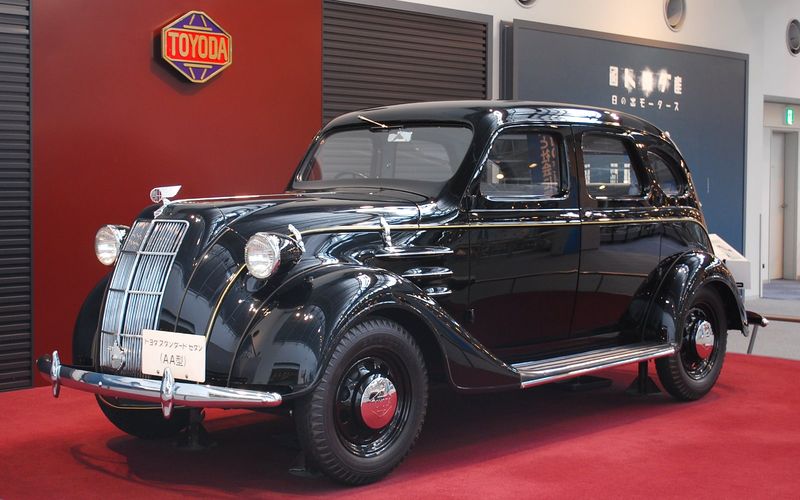
First Passenger Car Model AA Completed
Japan
Automotive History
Manufacturing
Export and Trade
4 min read
Updated By: History Editorial Network (HEN)
Published:
Updated:
The completion of the first passenger car, the Model AA, marked a pivotal development in the automotive industry in Japan. Produced by Toyoda Automatic Loom Works, the Model AA was introduced as a response to the growing demand for automobiles in the domestic market. Priced at ¥3,350, it was positioned as a more affordable alternative to competing models from Ford and General Motors, which were priced higher by ¥400. This pricing strategy aimed to attract a broader customer base and establish Toyoda's presence in the automotive sector. The production of the Model AA was facilitated by the newly completed plant in Kariya, which was essential for scaling up manufacturing capabilities to meet both domestic and international demand.
The impact of the Model AA extended beyond its initial sales. It represented a significant step for Toyoda in transitioning from textile manufacturing to automotive production, reflecting a strategic shift in the company's focus. Following the completion of the Model AA, Toyoda successfully filled its first export order, sending four G1 trucks to northeastern China, which indicated the company's ambition to enter international markets. Furthermore, the designation of Toyota Automatic Loom Works as an official automotive manufacturer by the Japanese imperial government underscored the importance of this transition. This recognition not only legitimized Toyoda's automotive endeavors but also laid the groundwork for future expansions and innovations in the automotive industry, ultimately leading to Toyota's emergence as a global leader in vehicle manufacturing.
#mooflife
#MomentOfLife
#Toyota
#ModelAa
#AutomotiveHistory
#JapaneseManufacturing
#PassengerCars

Explore the Life Moments of
 AI Twin