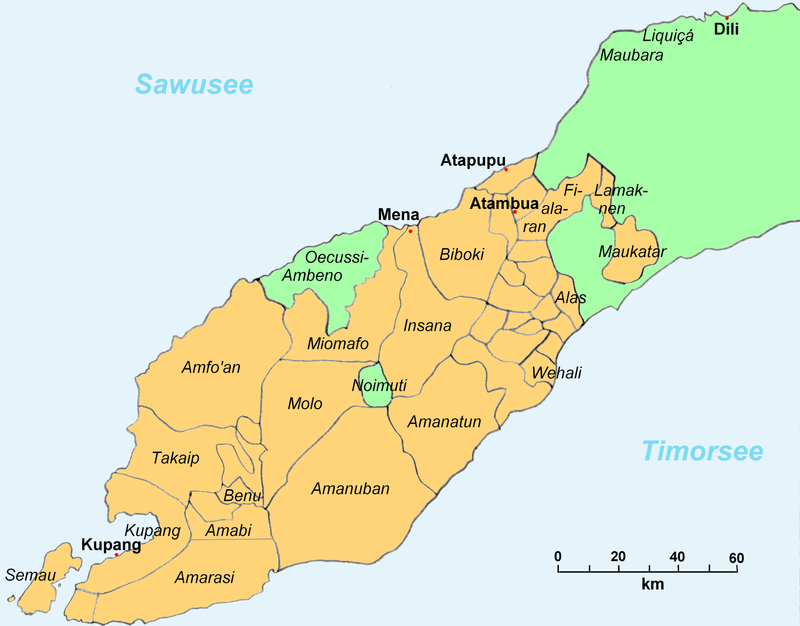
Portugal divides Timor between Dutch and Portuguese colonial powers; West Timor and East Timor.
Timor-Leste
Colonialism
3 min read
Updated By: History Editorial Network (HEN)
Published:
Portugal formally acknowledged the division of Timor island between two colonial powers, Dutch controlling West Timor and Portuguese governing East Timor. This decision stemmed from historical disputes over territorial claims and colonial interests. The recognition solidified existing systems of governance and trade within respective territories. East Timor, under Portuguese rule, became a site of cultural blending and Christian missionary activities, while West Timor maintained closer ties with the Dutch East Indies.
The impact of Portugal's recognition of the division of Timor facilitated the establishment of clear boundaries and administrative structures. This acknowledgment helped stabilize relations between the two colonial powers, enabling them to focus on economic exploitation and governance within their respective areas. East Timor experienced a stronger Portuguese influence in terms of language, religion, and administration, while West Timor was more influenced by Dutch practices.
The division of Timor island highlights the complex colonial history of Southeast Asia and the arbitrary lines drawn across territories by European powers. The decisions made during this period continue to influence the cultural, political, and social dynamics of Timor island to this day.
#Portugal #Timor #ColonialDivision #EastTimor #WestTimor
Primary Reference
East Timor's Land Tenure Problems: A Consideration of Land ...
Explore the Life Moments of
 AI Twin