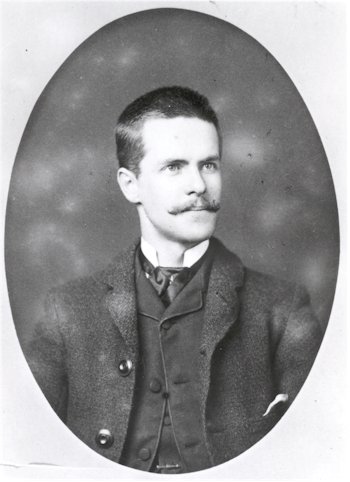
William Joseph Hammer: Vital role in Edison's lab, shaping the future of electrical innovation.
United States of America
Technology
Science
4 min read
Updated By: History Editorial Network (HEN)
Published:
Updated:
William Joseph Hammer began his duties as a laboratory assistant under Thomas Edison. Hammer's entrance into Edison's lab marked a pivotal point in the development of electrical innovations. Joining the team, Hammer's initial tasks included assisting in various experiments, many of which were crucial to the successful development of the electric light bulb and other inventions.
Edison's laboratory was an epicenter of technological advancement, where ideas quickly transformed into tangible solutions. Hammer was part of the rigorous testing and refining processes. His role was hands-on, often involving intricate experimentation with electric light filaments, which required detailed measurement and observation. The collaboration contributed to the eventual perfection of a commercially viable incandescent lamp.
Hammer’s assistance in the experiments didn't just help in the mechanical process but also in documenting and managing the vast amounts of trial data. His systematic approach helped streamline experiments, ensuring that results were accurately recorded and analyzed. This meticulous record-keeping was critical in making incremental improvements, leading to significant breakthroughs.
Though Hammer is less renowned than Edison, his contributions were vital to the lab's productivity and success. The body of work produced during this period laid the foundations for modern electrical engineering and had far-reaching impacts on subsequent technological advancements. Such detailed efforts inside the laboratory underscored the importance of collaborative and meticulous research for impactful innovations.
#MoofLife #ThomasEdison #Innovation #Electricity #EngineeringHistory #LaboratoryResearch
Primary Reference
In Uncle Sam's Service: WWI Inventor William J. Hammer | Lemelson
Explore the Life Moments of
 AI Twin