Thomas Edison's Controversial Statement on Life's Origins Challenges Religious Norms
United States of America
Science
Religion
4 min read
Updated By: History Editorial Network (HEN)
Published:
Updated:
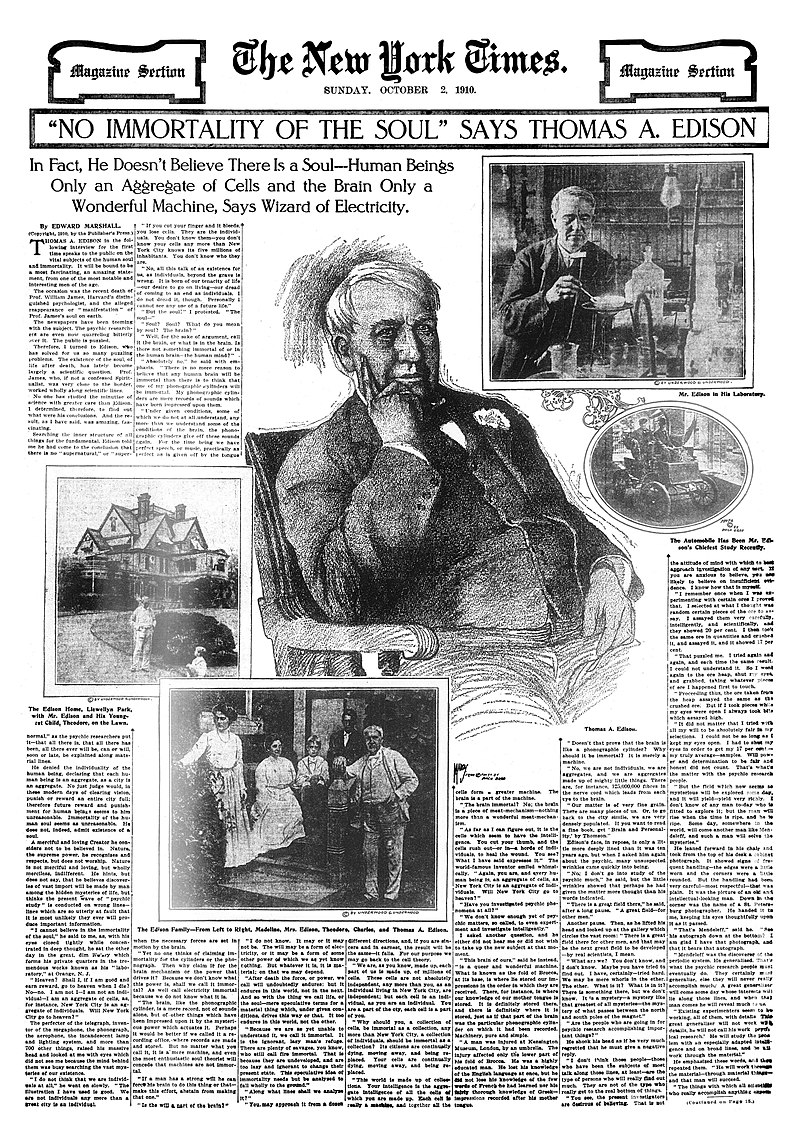
Thomas Edison, widely known for his significant contributions to the development of the electric light bulb, the phonograph, and numerous other inventions, made a statement that reverberated through society during an interview with New York Times Magazine. Edison, a prominent public figure, asserted that life was a creation of nature rather than religious deities. This statement immediately drew considerable attention and sparked widespread controversy.
At the time, religious beliefs were deeply intertwined with societal norms, and Edison's remarks were seen as a direct challenge to these established norms. His assertion led to debates regarding the origins of life, with many labeling him an atheist. The controversy illuminates the broader societal tensions of that era, where scientific advancements often clashed with traditional religious views.
Edison’s impact on public opinion was profound, with many Americans grappling with the implications of his rejection of religious explanations for life’s origins. His views contributed to an ongoing discourse about the relationship between science and religion, and this moment is often cited as a catalyst in the broader acceptance of scientific principles over religious doctrine in public discussions about life's origins.
Edison's statement underscored the growing influence of science and reason, reflecting the changing attitudes of a society increasingly looking to scientific inquiry and evidence-based beliefs. This incident also showcased the power of media in shaping public perception, with the New York Times Magazine interview reaching a wide audience and influencing public discourse.
#ThomasEdison #CreationDebate #ScienceVsReligion #OriginsOfLife #PublicControversy #MoofLife
Primary Reference
Deism - Wikipedia
Explore the Life Moments of
 AI Twin