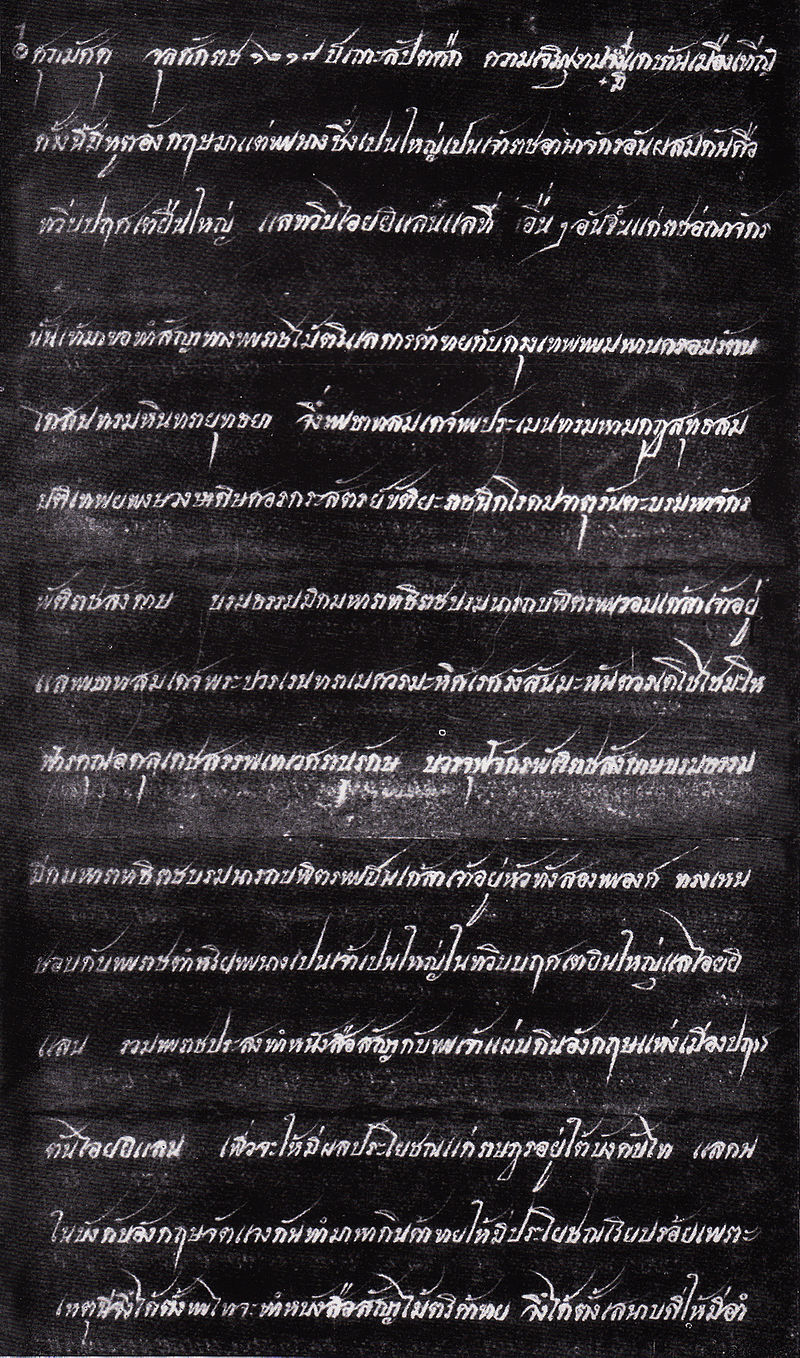
Bowring Treaty between Siam and Britain
Thailand
Political
Global Trade
4 min read
Updated By: History Editorial Network (HEN)
Published:
In 18-Apr-1855, the Bowring Treaty was signed between Siam and Britain. This treaty was named after Sir John Bowring, the British signatory and governor of Hong Kong at the time. The agreement aimed to establish diplomatic relations, promote trade, and protect the interests of British subjects in Siam.
Prior to the treaty, Siam had a policy of isolationism, which limited foreign influence in the country. However, increasing pressure from Western powers, particularly Britain, led to the signing of the treaty. The Bowring Treaty granted extraterritorial rights to British citizens in Siam, allowing them to be governed by British laws instead of Siamese laws.
One of the significant impacts of the Bowring Treaty was the modernization and opening up of Siam to Western trade and influence. The treaty facilitated the exchange of goods and ideas between Siam and Britain, leading to economic growth and cultural exchange. It also paved the way for further treaties with other Western powers, shaping Siam's foreign relations in the years to come.
The Bowring Treaty marked a shift in Siam's foreign policy, moving away from isolationism towards engagement with the global community. It set a precedent for future trade agreements and diplomatic relations with Western nations, positioning Siam as a key player in regional politics.
Overall, the signing of the Bowring Treaty was a significant moment in Thai history, marking the beginning of a new era of international engagement and modernization for the country. It played a crucial role in shaping Siam's relationship with Britain and other Western powers, leaving a lasting impact on the country's economy and foreign policy.
#BowringTreaty #Siam #Britain #TradeAgreement #DiplomaticRelations

Explore the Life Moments of
 AI Twin