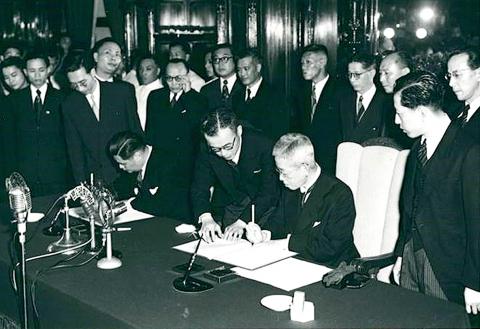
Treaty of Taipei Signing
Taiwan
International Relations
2 min read
Updated By: History Editorial Network (HEN)
Published:
Updated:
The Treaty of Taipei was signed between the Republic of China (ROC) and Japan, establishing a legal framework regarding the status of Taiwan and the Penghu Islands. This treaty declared that all treaties, conventions, and agreements between China and Japan prior to a specific date were null and void, effectively nullifying Japan's claims over these territories. The signing of the treaty is often viewed as a pivotal moment in the ROC's assertion of sovereignty over Taiwan, as it provided legal backing for the ROC's claim to Taiwan as 'de jure' territory. The treaty's implications have been a subject of legal and political discourse, particularly in relation to Japan's position on Taiwan's status. Japanese court decisions have supported the notion that Taiwan and the Penghu Islands belong to the ROC, reinforcing the treaty's significance in international relations and territorial claims in East Asia.
#mooflife
#MomentOfLife
#TreatyOfTaipei
#RepublicOfChina
#Japan
#TaiwanSovereignty
#InternationalRelations

Explore the Life Moments of
 AI Twin