Establishment of Provisional ROC Capital in Taipei
Taiwan
Historical Events
Political History
Chinese History
3 min read
Updated By: History Editorial Network (HEN)
Published:
Updated:
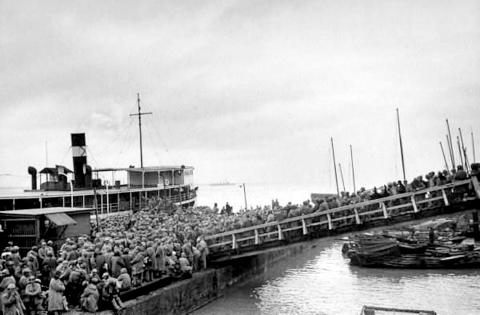
In the aftermath of the Chinese Civil War, the Nationalist government, led by Chiang Kai-shek, retreated to Taiwan following their defeat by the Communist forces. This retreat was a pivotal moment in Chinese history, as it marked the end of the Nationalist government's control over mainland China and the establishment of the People's Republic of China. In response to this significant shift in power, Chiang Kai-shek established a provisional capital in Taipei, moving the government from Nanjing to ensure continuity of governance for the Republic of China (ROC). This relocation was crucial for maintaining the Nationalist presence and authority in Taiwan, as it allowed the government to reorganize and adapt to the new political landscape.
The establishment of the provisional ROC capital in Taipei had lasting implications for Taiwan's political and social development. It solidified Taipei's role as the center of the ROC government and laid the groundwork for Taiwan's future as a separate political entity. The move also influenced Taiwan's economic policies and military strategies, as the government sought to strengthen its position against the Communist regime in mainland China. Over time, Taipei evolved into a vibrant metropolis, reflecting the resilience and adaptability of the ROC government in exile. The establishment of the provisional capital was not just a response to immediate challenges but also a strategic decision that shaped Taiwan's trajectory for decades to come.
#mooflife
#MomentOfLife
#Taiwan
#Roc
#ChiangKai-shek
#Taipei
#ChineseCivilWar

Explore the Life Moments of
 AI Twin