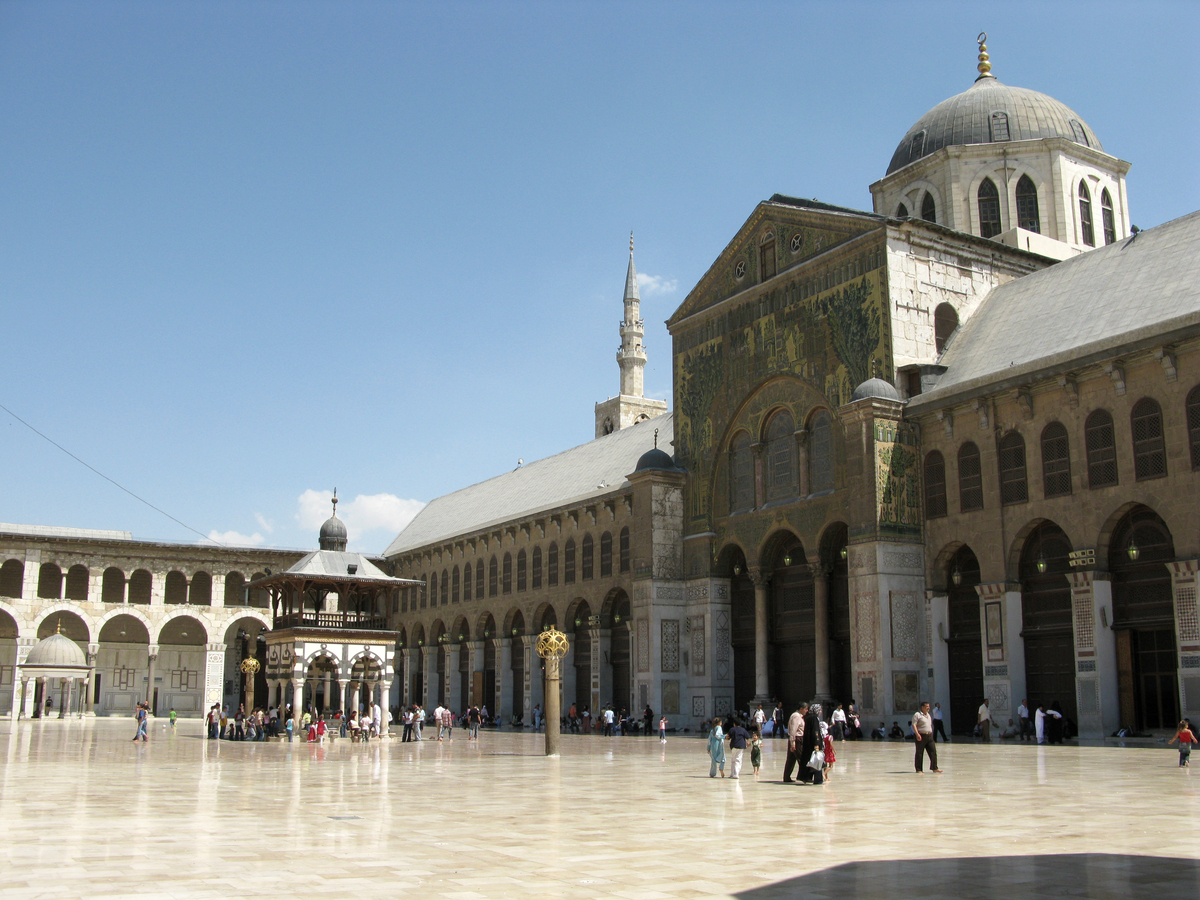
The Great Mosque of Damascus: A Historic Landmark in the Making
Syria
Cultural Heritage
4 min read
Updated By: History Editorial Network (HEN)
Published:
Updated:
During the Umayyad Caliphate, the construction of the Great Mosque of Damascus started, marking a milestone in Islamic architecture. Located in Damascus, Syria, this mosque emerged on the site of a Christian basilica dedicated to John the Baptist, symbolizing the transfer of authority and religious significance to the Islamic world.
Caliph Al-Walid I initiated the project, intending to create a grand mosque that reflected the power and cultural richness of the Umayyad dynasty. The construction process involved architects and artisans from diverse backgrounds, including Byzantine and Persian influences. This eclectic blend of styles contributed to the mosque's unique architectural features, such as its large prayer hall, the intricate mosaics depicting paradise landscapes, and the incorporation of columns and arcades.
The Great Mosque's construction required substantial resources. Historical records indicate that workers used materials from various regions, including marble and glass mosaics, underscoring the extensive trade networks and the wealth at the Caliphate’s disposal. Additionally, the construction process mobilized thousands of laborers and craftsmen, reflecting the scale and ambition of the project.
The mosque served not only as a place of worship but also as a community center and a symbol of Islamic unity and strength. Its completion was a statement of the Caliphate's dominance, promoting Damascus as a pivotal city in the Islamic world. The mosque has since become a focal point for Muslim pilgrims and an enduring testament to the architectural and cultural achievements of the Umayyad period.
#UmayyadCaliphate #GreatMosqueOfDamascus #IslamicArchitecture #CulturalHeritage #SyrianHistory #MoofLife
Primary Reference
UMAYYAD MOSQUE IN ALEPPOYESTERDAY, TODAY AND ...

Explore the Life Moments of
 AI Twin