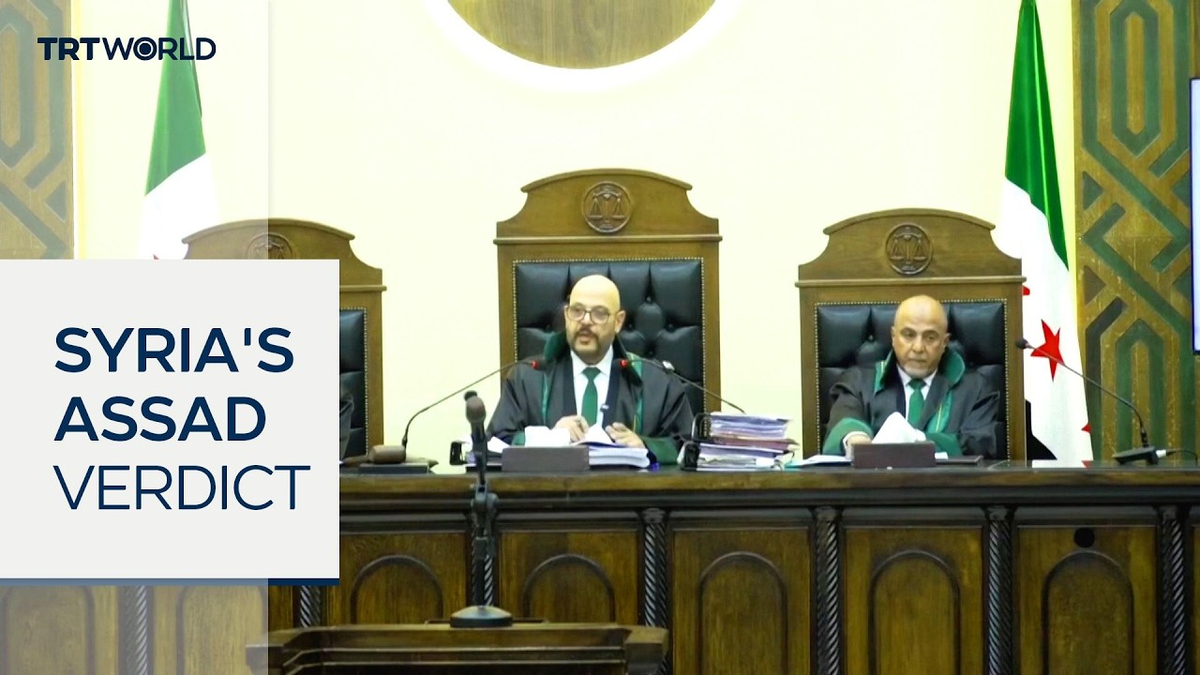
Syrian Court Sentences Bashar al-Assad and Senior Regime Officials to Death
Damascus, Syrian Arab Republic
Political
Law
7 min read
Updated By: History Editorial Network (HEN)
Published:
On 11/08/2026, the Fourth Criminal Court in Damascus sentenced former Syrian President Bashar al-Assad, his brother Maher al-Assad, and former political security chief Atef Najib to death in a landmark ruling related to crimes committed during the Syrian civil war. The decision marked the first time a Syrian domestic court formally convicted members of the former regime's highest leadership for war crimes and other serious human rights violations.
The court convicted the defendants of multiple offenses, including premeditated murder, systematic torture, arbitrary detention, and crimes against humanity. Prosecutors argued that the defendants played direct roles in policies and actions that contributed to widespread abuses during the conflict that began in 2011 and continued for more than 14 years.
A central focus of the trial was the government's response to demonstrations in the southern city of Daraa during the early months of the uprising. Court proceedings examined the detention and torture of schoolchildren who had written anti-government graffiti, an incident that became one of the most widely recognized catalysts for the nationwide protests that followed. Prosecutors presented evidence linking security officials to the crackdown that transformed local demonstrations into a broader national conflict.
The ruling extended beyond the Assad family. In total, nine former regime officials received death sentences, including former Defense Minister Fahd Jassem al-Freij and former military intelligence chief Louay al-Ali. The court concluded that senior political, military, and intelligence officials shared responsibility for policies that led to widespread abuses against civilians.
The legal status of the defendants differed significantly. Atef Najib, Bashar al-Assad's maternal cousin and the former head of political security in Daraa, was the only defendant physically present during the trial. Arrested in Latakia in January 2025 by transitional security authorities, he appeared before the court in custody. Under Syrian law, his sentence remains subject to review by the Court of Cassation before it can be carried out.
Bashar al-Assad and Maher al-Assad were both tried in absentia. Following the collapse of the former government during the December 2024 rebel offensive, the two men left Syria and later received political asylum in Russia. Because they were not in Syrian custody, the sentences cannot be enforced unless they are extradited or voluntarily return to Syria.
The trial represented a central component of the transitional government's efforts to establish a framework for transitional justice. Outside the Palace of Justice in Damascus, families of victims gathered following the verdict, with many viewing the ruling as an acknowledgment of years of suffering. At the same time, legal experts emphasized that long term accountability will depend on judicial independence, due process, and the continued development of legal institutions capable of addressing crimes committed throughout the conflict.
Historical Significance:
The 11/08/2026 ruling represented a rare example of a post-conflict government using its domestic judicial system to prosecute former national leaders for actions committed during a civil war. Although questions remain regarding enforcement, the verdict established a legal record of responsibility within Syria's own courts and became an important milestone in the country's ongoing transitional process.
#Syria
#BasharAlAssad
#SyrianCivilWar
#Damascus
#TransitionalJustice
#WarCrimes
#HumanRights
#MiddleEast

Explore the Life Moments of
 AI Twin