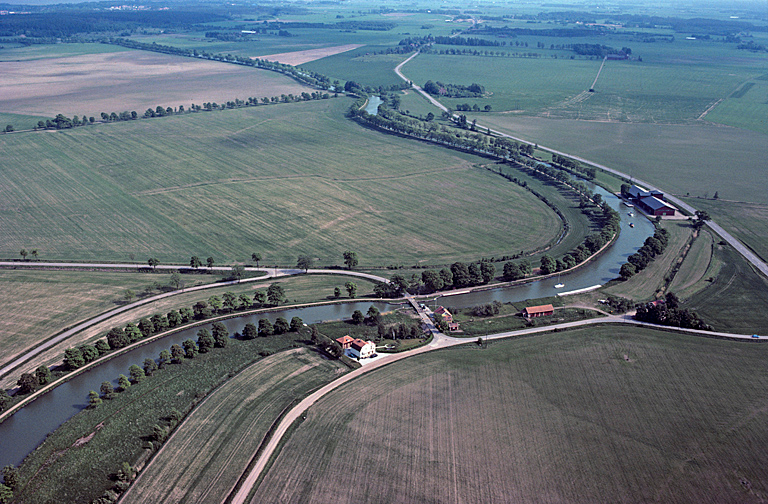
Göta Canal connects Gothenburg to Söderköping, boosting cross-country transportation.
Sweden
Transportation Development
SwedenCommerce
3 min read
Updated By: History Editorial Network (HEN)
Published:
The completion of the Göta Canal connected the Swedish cities of Gothenburg and Söderköping, spanning coast-to-coast. This feat came after over two decades of construction, facilitated by the vision of engineer Baltzar von Platen. The canal's 58 locks allowed for the smooth passage of boats, enhancing transportation and trade within Sweden.
This engineering marvel revolutionized inland transportation, providing a direct route between the North Sea and the Baltic Sea. Prior to its completion, ships had to navigate around Sweden's southern tip, a journey marked by treacherous waters and long distances. The canal significantly reduced travel time, fuel consumption, and risks associated with the previous maritime route.
The efficient transport of goods and passengers along the canal spurred economic growth in the region and strengthened connections between the western and eastern coasts of Sweden. The completion of the Göta Canal catalyzed urban development in towns along its path, creating hubs of commerce and industry.
Today, the Göta Canal remains a vital artery for transportation in Sweden, blending historical significance with modern functionality. It stands as a testament to human ingenuity and perseverance in overcoming geographical challenges.
#GötaCanal #TransportationDevelopment #SwedenCommerce
Primary Reference
STATE OF THE CLIMATE IN 2009

Explore the Life Moments of
 AI Twin