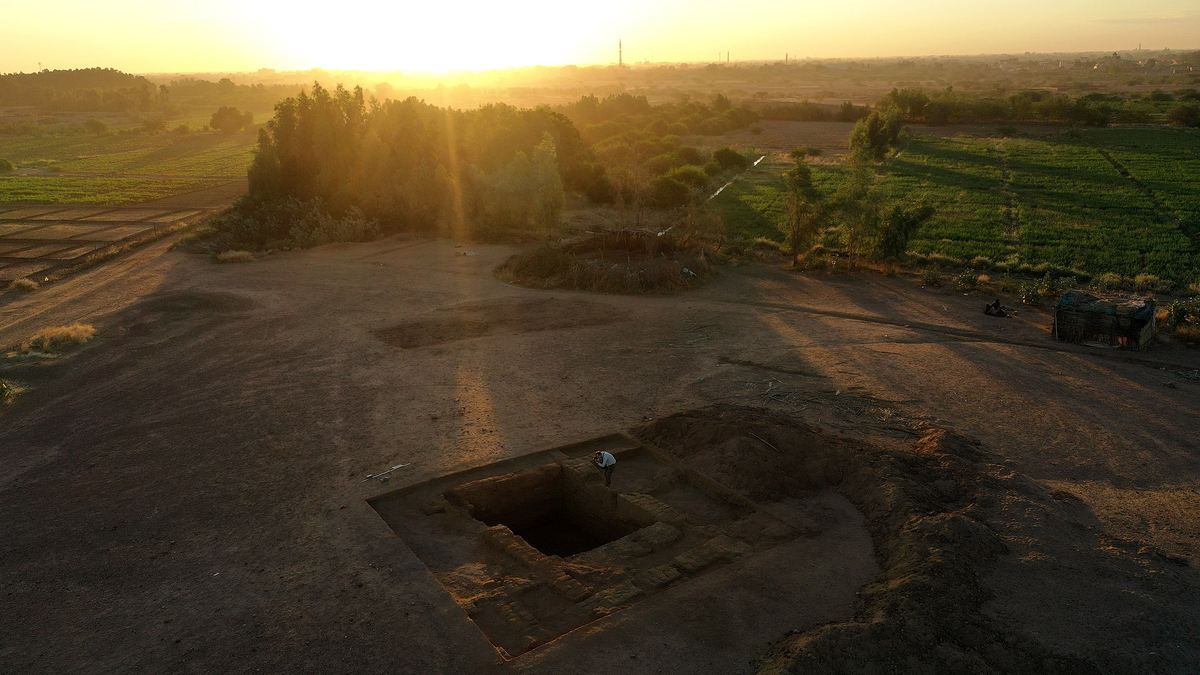
Rise of Alwa's Capital: Soba City's Construction
Sudan
Political
5 min read
Updated By: History Editorial Network (HEN)
Published:
In the middle of the 6th century, the Kingdom of Alwa in what is now Sudan chose Soba as its capital. The decision was influenced by several factors including strategic location, access to resources, and political stability. Alwa, part of the broader Nubian region, had embraced Christianity, which shaped its administrative and cultural foundations.
Soba, situated near the confluence of the Blue Nile and White Nile rivers, was an ideal choice due to its access to water routes, facilitating trade and communication. This location enabled the kingdom to consolidate its power, control trade routes, and interact with neighboring regions. The construction of Soba marked a crucial phase in the establishment of a Christian kingdom in a predominantly non-Christian region.
The construction process involved building religious, administrative, and residential structures. Church construction showcased the embrace of Christianity, with architectural styles reflecting Byzantine influences. The inclusion of religious buildings emphasized the role of the church in governance and daily life. Administrative buildings housed the kingdom's bureaucracy, coordinating activities across the extended territory of Alwa.
The impact of establishing Soba as the capital was multifaceted. Economically, it became a hub for trade; artisans and traders congregated there, facilitating the exchange of goods such as textiles, pottery, and grain. Politically, Soba’s prominence cemented Alwa’s control over its territory, resisting challenges from other Nubian kingdoms and external threats. Culturally, the city contributed to the diffusion of Christianity and fostered a unique blend of local and Hellenistic traditions. The city’s educational and religious institutions promoted literacy and theological scholarship, influencing the broader region.
The establishment of Soba had long-lasting implications for Sudan’s historical landscape. By centralizing governance and fostering a cultural renaissance, it laid foundational structures for subsequent developments in the region. Soba’s significance declined after several centuries, but its historical influence persisted, marking a key phase in Sudanese history.
#MoofLife #SobaCapital #ChristianKingdom #NubianHistory #SudanHistory #EconomicHub #CulturalRenaissance #TradeRoutes #AdministrativeCenter

Explore the Life Moments of
 AI Twin