The 2026 Ceuta Border Crisis
Spain
Political
7 min read
Updated By: History Editorial Network (HEN)
Published:
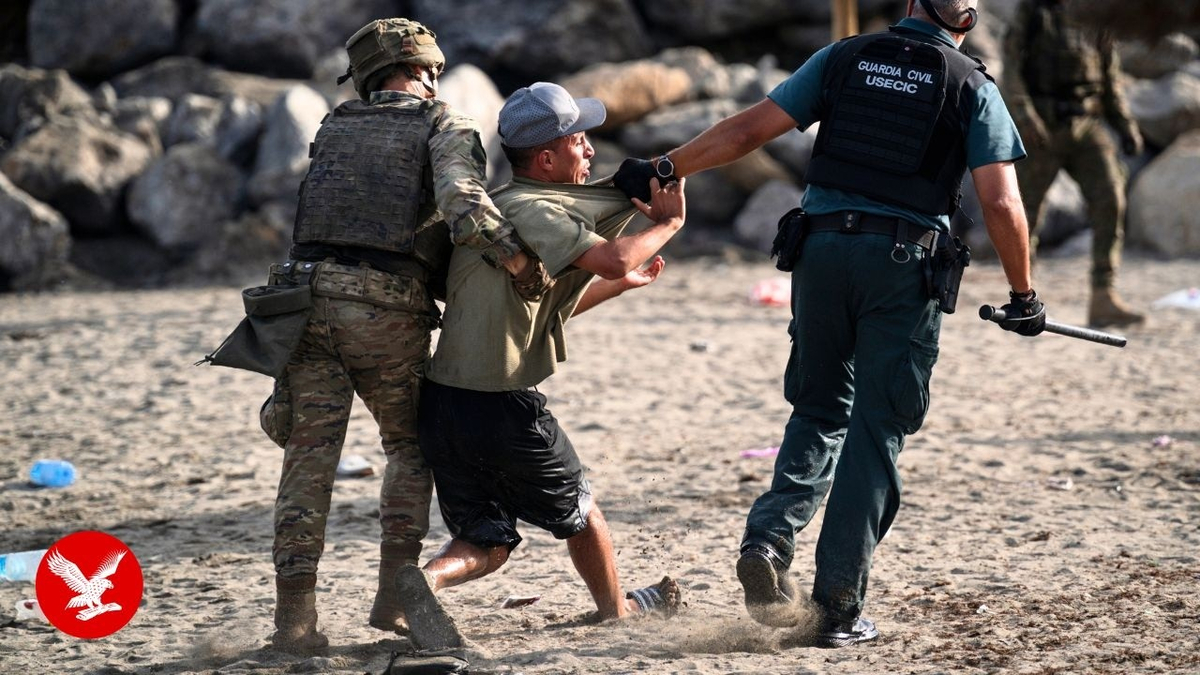
On 30 July 2026, an unprecedented movement of people began at Morocco’s border with Ceuta, the Spanish autonomous city on the North African coast. Thousands approached the frontier near Fnideq, entering Ceuta through damaged gates, over border fencing and by swimming around coastal barriers. Spain rapidly deployed additional police officers and military personnel as local reception facilities and emergency services became overwhelmed.
Initial reports suggested that between 2,000 and 3,000 people had entered during the first hours. The scale then expanded dramatically. Spain’s Interior Ministry estimated that approximately 49,000 people crossed during a 24-hour period, while Ceuta’s regional authorities placed the early total as high as 60,000. By 4 August, the Spanish government said its revised estimate was approximately 72,000 arrivals across the entire incident, of whom around 70,000 had subsequently returned or been returned to Morocco. Therefore, describing 70,000 people as having crossed specifically on 30 July is imprecise; the number represents the broader multi-day crisis.
Most of those crossing were reportedly Moroccan citizens, including many young people and some families. Some entered through the land frontier, while others attempted dangerous swims along the Mediterranean coastline. The rush produced scenes of panic and disorder, with people drowning, being crushed in crowds or suffering injuries on the border infrastructure. The final casualty figures remained disputed, but reports indicated that dozens of people died during the crisis.
The incident was reportedly encouraged by viral social-media claims suggesting that the border had opened or that migrants reaching Spanish territory would be allowed to remain or continue into mainland Europe. These messages were linked to misleading interpretations of a Spanish Supreme Court decision limiting immediate expulsions in certain circumstances. The ruling did not create an unrestricted right to enter or remain in Spain, but rumours surrounding it spread quickly through online networks. Spanish and Moroccan authorities also accused smuggling groups of exploiting the confusion.
Smaller groups gathered near Melilla, Spain’s other autonomous city in North Africa, and confrontations were reported around the Beni Ansar crossing. However, Melilla did not experience an influx comparable to Ceuta’s.
The crisis highlighted Ceuta’s unusual position: geographically in Africa, politically part of Spain and located on one of the European Union’s few land borders with the African continent. Although reaching Ceuta meant entering Spanish territory, travellers still faced identity controls before proceeding to mainland Spain. Many therefore discovered that crossing the border did not provide automatic access to continental Europe.
The events of 30 July became one of the largest recorded breaches of a European external border, exposing the lethal combination of economic desperation, misinformation, irregular migration networks and sudden failures in border control.
#Ceuta
#Spain
#Morocco
#Migration
#EuropeanUnion
#Schengen
#BorderCrisis
#HumanitarianCrisis
Explore the Life Moments of
 AI Twin