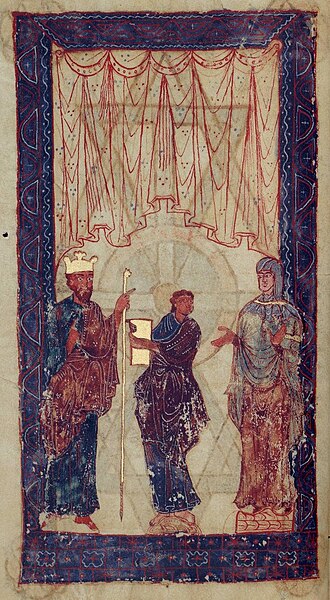
Ferdinand the Great crowned himself as Emperor of all Spain.
Spain
Political & Governance
3 min read
Updated By: History Editorial Network (HEN)
Published:
Updated:
In 1056, in Spain, Ferdinand the Great made a momentous decision and crowned himself Imperator totius Hispaniae. This event marked the beginning of a new era in Spanish history. Ferdinand, known for his military and political prowess, was already the King of Leon and Castile, but his self-proclaimed title as Imperator totius Hispaniae solidified his authority over all Christian territories in Spain. This bold move reflected Ferdinand's ambition to consolidate power and unify the various kingdom's under his rule. With his new title, Ferdinand aimed to assert his dominance over the Moors who still held significant territories in the Iberian Peninsula. His reign ushered in an era of increased Christian expansion and reconquest, which would eventually lead to the formation of modern-day Spain. Ferdinand's coronation as Imperator totius Hispaniae marked a turning point in Spanish history, strengthening the kingdom's position and setting the stage for centuries of political and military developments. #Spain #FerdinandtheGreat #Imperator #History #SpanishMonarchy
Primary Reference
Bruno Aguilera-Barchet - A History of Western Public Law
Explore the Life Moments of
 AI Twin