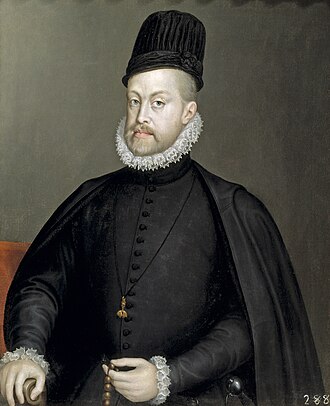
Charles gave up his throne for Philip, who became the new king of Spain.
Spain
Political & Governance
People & Culture
2 min read
Updated By: History Editorial Network (HEN)
Published:
Updated:
In 1556, a significant moment occurred in Spain when Charles V, the Holy Roman Emperor, decided to abdicate his throne in favor of his son, Philip. This marked the beginning of Philip's reign as King Philip II of Spain. Charles V's decision to abdicate was influenced by various factors, including his failing health and his desire to ensure a smooth succession. By stepping down, Charles entrusted the vast empire to Philip, who would go on to become one of the most powerful monarchs in European history. As King Philip II, he continued his father's policies and sought to centralize power in Spain. He expanded the empire by conquering new territories, including the Philippines, and his reign witnessed Spain's golden age of culture and art. However, Philip's rule was also marked by religious tensions, particularly with Protestant countries, leading to conflict and wars, such as the Eighty Years' War with the Netherlands. #Spain #CharlesV #abdication #PhilipII #SpanishMonarchy
Explore the Life Moments of
 AI Twin