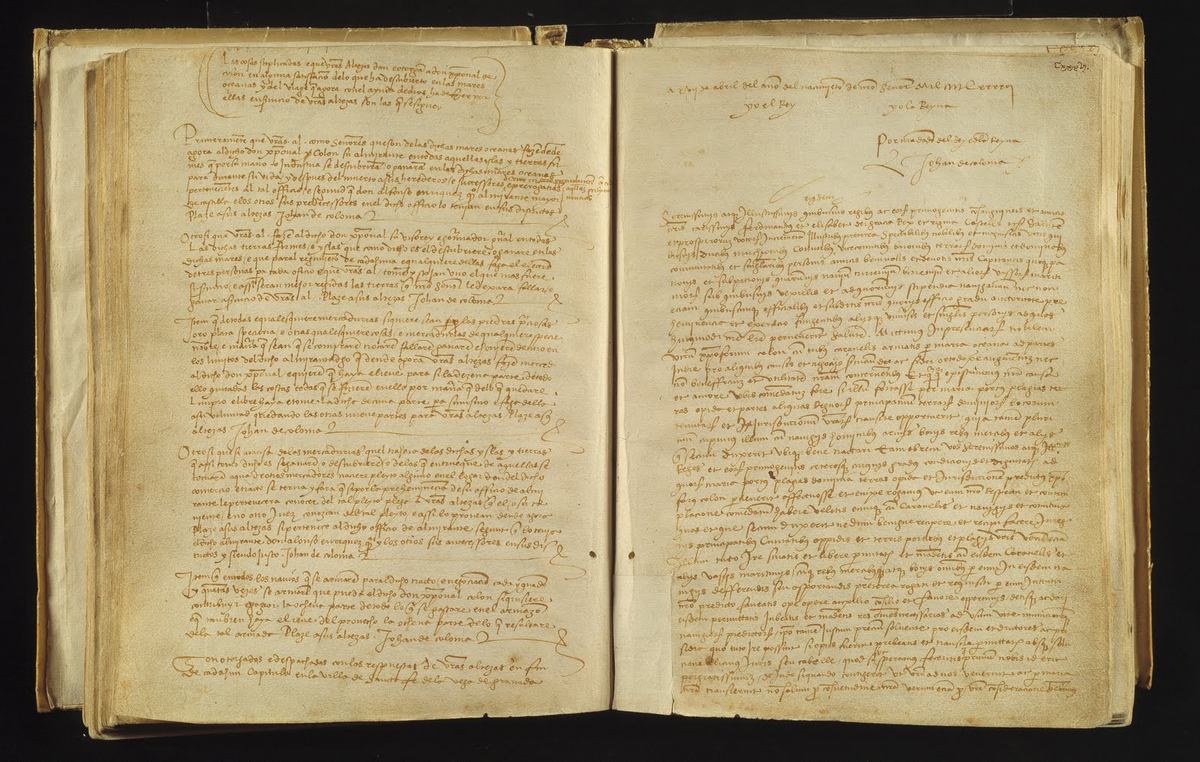
Capitulations of Santa Fe
Spain
Political
7 min read
Updated By: History Editorial Network (HEN)
Published:
On April 17, 1492, a pivotal agreement known as the Capitulations of Santa Fe was signed between Christopher Columbus and the Catholic Monarchs, Queen Isabella I of Castile and King Ferdinand II of Aragon, in the military encampment of Santa Fe, near Granada, Spain. This document laid the foundation for one of the most consequential voyages in world history — Columbus’s westward journey across the Atlantic that would lead to the European discovery of the Americas.
Background: A Moment After Victory
The timing of the Capitulations was critical. Just months earlier, in January 1492, the Catholic Monarchs had completed the Reconquista by capturing Granada, the last Muslim stronghold on the Iberian Peninsula. This marked not only a consolidation of Christian rule but also the emergence of a more unified Spanish kingdom with growing imperial ambitions.
Amidst the celebration of this victory, Columbus, a Genoese navigator who had spent years trying to find backing for his bold plan to reach the Indies by sailing west, finally secured an audience and convinced the monarchs of the potential wealth and religious expansion his voyage could bring.
What the Capitulations Promised
The Capitulations of Santa Fe were essentially a contractual agreement outlining the terms under which Columbus would undertake the expedition. The document granted him:
The titles of Admiral of the Ocean Sea, Viceroy, and Governor-General over any lands he discovered or claimed for Castile.
Ten percent of all profits (gold, spices, and other goods) from the voyage and any new territories.
The right to propose three candidates for any important posts in these territories, one of whom the Crown would have to appoint.
The noble status of Don, a significant elevation in social rank.
These were extraordinary privileges for a foreigner and minor figure at the Spanish court, reflecting both Columbus’s persistence and the monarchs’ gamble on his vision. Importantly, the agreement also framed the voyage as one aimed not just at trade, but at spreading Christianity, aligning it with Spain’s broader religious and imperial objectives.
The Voyage That Followed
With the Capitulations signed, preparations quickly followed. On August 3, 1492, Columbus set sail from Palos de la Frontera with three ships — the Niña, the Pinta, and the Santa María. Less than three months later, on October 12, 1492, he reached what would later be known as the Bahamas, believing he had arrived in the Indies.
While the Capitulations didn’t envision the discovery of a new continent, they were the launchpad for what would become the Age of Exploration and eventually the Spanish Empire in the Americas. The consequences were vast: indigenous civilizations were disrupted or destroyed, transatlantic trade systems emerged, and Europe’s geopolitical and economic centers began to shift.
Legacy of the Capitulations
Though Columbus’s later voyages were met with mixed results, and his governance in the New World was marred by controversy and accusations of brutality, the Capitulations of Santa Fe remain a symbolic starting point of European colonial expansion.
Today, the original Capitulations document is preserved in the Archivo de Indias in Seville, a testament to how a relatively brief legal agreement helped reshape the course of global history.
#MomentsOfLife #MoofLife_Moment #MoofLife #Columbus1492 #CapitulationsOfSantaFe #CatholicMonarchs #AgeOfExploration #HistoryTurningPoint
Primary Reference
Capitulations of Santa Fe
Explore the Life Moments of
 AI Twin