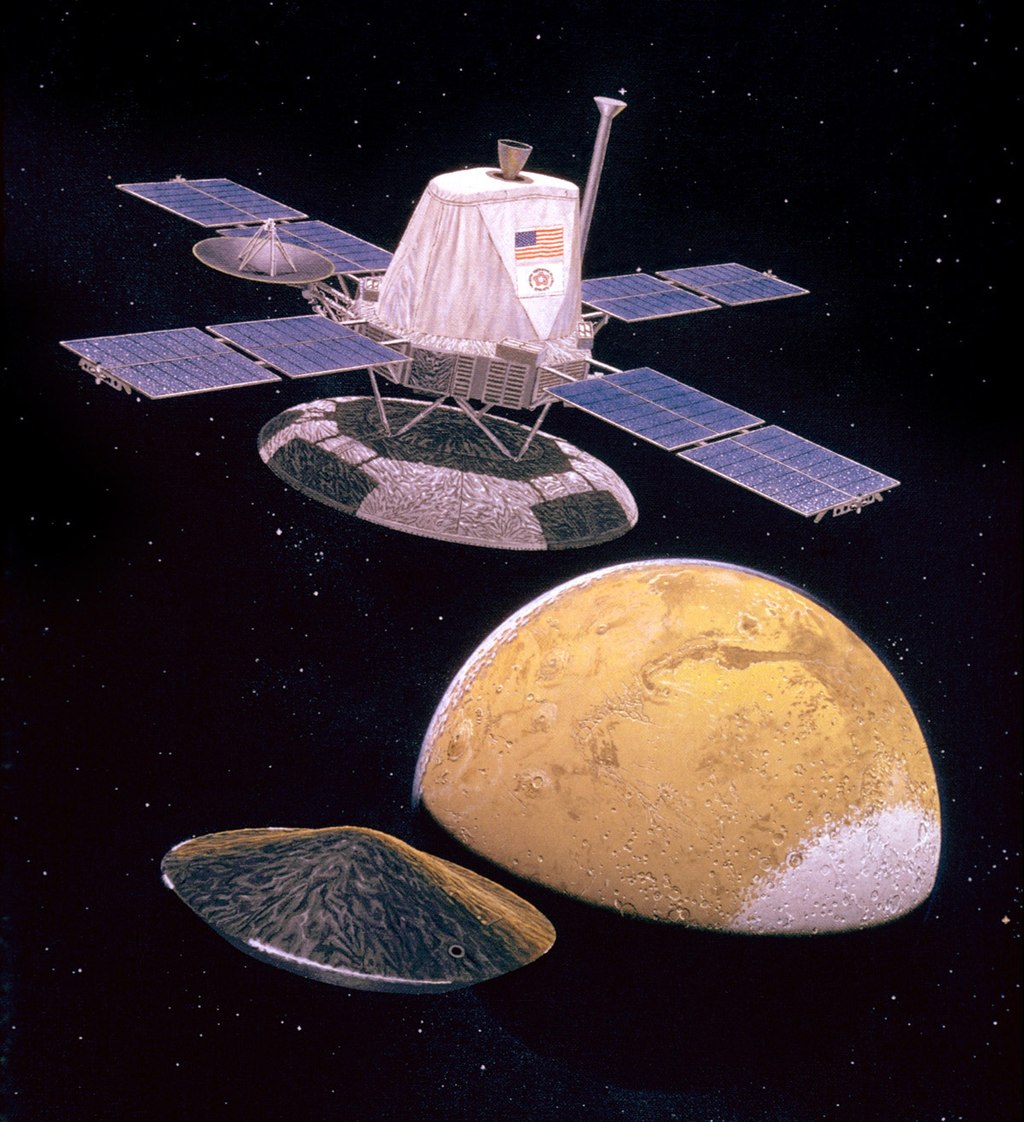
First successful photos and soil samples from Mars
Chryse Planitia, Mars
Space Exploration
Mars Missions
Astrobiology
4 min read
Updated By: History Editorial Network (HEN)
Published:
Updated:
On 20/07/1976, NASA’s Viking 1 spacecraft successfully landed on the surface of Mars, becoming the first United States mission to achieve a controlled landing on the planet and return detailed data from its surface. The lander touched down in the Chryse Planitia region and began transmitting images to Earth within minutes, marking a new phase in robotic planetary exploration.
Shortly after landing, Viking 1 sent back the first clear, close-up black-and-white image of the Martian surface, showing a rocky plain along with one of the lander’s footpads. This was followed by the first color photographs, which revealed the planet’s reddish terrain and a sky with a pinkish hue due to suspended dust in the thin atmosphere. These images provided the most detailed surface views of Mars obtained at that time.
On 28/07/1976, Viking 1 used its robotic arm to collect the first soil samples from the Martian surface. The samples were analyzed using onboard instruments designed to detect possible biological activity. While the results did not provide conclusive evidence of life, the experiments yielded extensive data on the chemical properties of Martian soil. The mission also gathered atmospheric measurements, confirming that Mars has a thin atmosphere composed mainly of carbon dioxide and surface temperatures that are consistently cold.
In addition to in-situ analysis, Viking 1 contributed to the understanding of Mars’s geological history. Data and images suggested the presence of ancient river channels and large-scale flooding events, indicating that liquid water may have once flowed on the planet’s surface. Viking 1 continued operating for several years, far beyond its planned mission duration, providing a long-term record of Martian environmental conditions.
#mooflife
#MomentOfLife
#MarsExploration
#NasaVikingLander
#SpaceMissions
#MartianSoilSamples
#PlanetaryScience
Primary Reference
Viking program

Explore the Life Moments of
 AI Twin