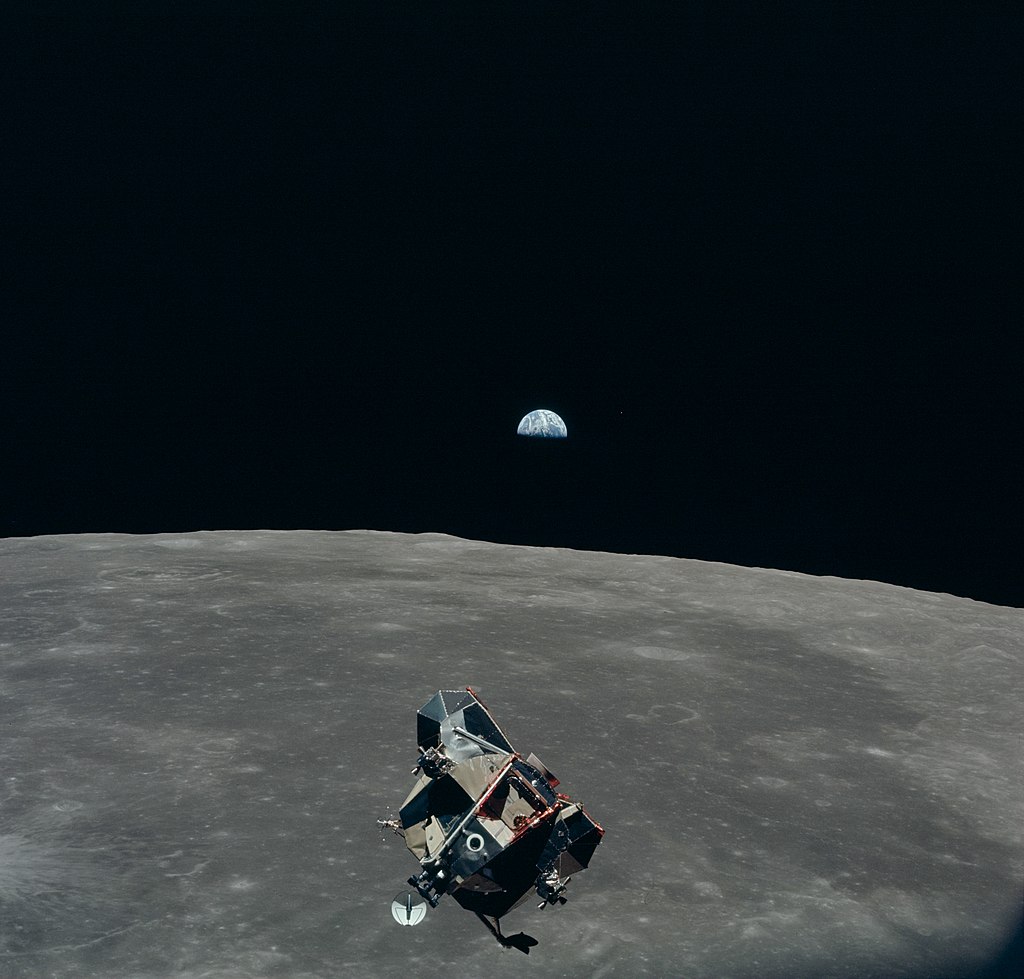
First space launch from another celestial body
Sea of Tranquility, Moon
Space Exploration
Aerospace Engineering
History of Science
3 min read
Updated By: History Editorial Network (HEN)
Published:
Updated:
On 21/07/1969, the Apollo 11 Lunar Module ascent stage, known as “Eagle,” became the first spacecraft to launch from the surface of another celestial body when it lifted off from the Moon. The liftoff occurred after astronauts Neil Armstrong and Edwin “Buzz” Aldrin completed their historic lunar surface activities in the Sea of Tranquility. This ascent marked a critical phase of the mission, as the crew prepared to leave the Moon and return to lunar orbit.
The ascent stage separated from the descent stage, which remained on the Moon, and ignited its engine to propel the astronauts back into orbit. The launch was precisely timed to rendezvous with the Command Module “Columbia,” piloted by Michael Collins, who remained in lunar orbit throughout the surface mission. The successful liftoff and subsequent docking demonstrated the feasibility of launching from another celestial body and executing orbital rendezvous in space, both of which were essential for the Apollo program’s mission architecture.
The ascent from the Moon followed the first human steps taken on the lunar surface on 20/07/1969 (UTC), completing the surface phase of Apollo 11. After docking with Columbia, Armstrong and Aldrin transferred back to the Command Module, and the ascent stage was later jettisoned. The mission continued with a return journey to Earth, culminating in a splashdown in the Pacific Ocean on 24/07/1969.
#mooflife
#MomentOfLife
#Apollo11
#SpaceExploration
#LunarMission
#Nasa
#CelestialBodyLaunch
Primary Reference
Apollo 11

Explore the Life Moments of
 AI Twin