First Primate in Space Achievement
White Sands Proving Ground, New Mexico, United States
Space Exploration
Science
3 min read
Updated By: History Editorial Network (HEN)
Published:
Updated:
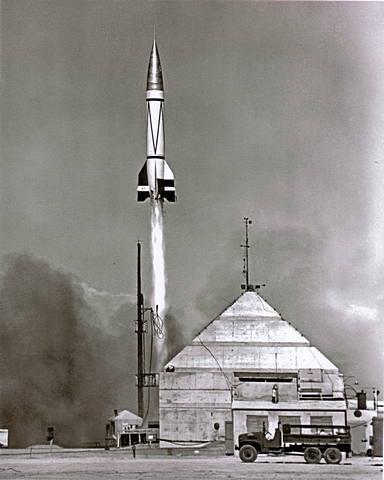
On 14/06/1949, a rhesus macaque named Albert II became the first primate to reach space during a U.S. Army Air Forces experiment using a V-2 rocket. The launch took place from White Sands Proving Ground in New Mexico, where captured German V-2 rockets were repurposed for scientific research following World War II. The mission aimed to study the biological effects of high-altitude flight on living organisms.
Albert II was placed inside a specially designed capsule equipped with monitoring instruments to record vital signs such as breathing and heart rate during the flight. The rocket reached an altitude of approximately 134 kilometers, surpassing the Kármán line, which is commonly defined as the boundary of space at 100 kilometers above Earth’s surface. This made Albert II the first primate to enter space.
Although Albert II survived the ascent and experienced weightlessness, the mission ended tragically when the parachute system failed during descent, resulting in a fatal impact. Despite this outcome, the flight provided valuable data on the physiological effects of acceleration and spaceflight conditions, contributing to early research that would later support human space missions.
#mooflife
#MomentOfLife
#PrimateInSpace
#AlbertIi
#SpaceExploration
#V-2Rocket
#AnimalSpaceflight
Primary Reference
Albert II (monkey)

Explore the Life Moments of
 AI Twin